A malicious build of the Claude Code extension, identified as version 2.1.313, has reached developers working in the Cursor code editor. Because the trojanized extension carries the Claude Code name, developers who installed it may not realize anything is wrong. This article covers what is known about the malicious version and which users are exposed.
Artificial intelligence is reshaping how organizations operate, and cybersecurity awareness programs need to be examined in that context. This article explores what rethinking cybersecurity awareness in the AI era involves, why existing training approaches deserve a fresh review, and how IT professionals and business decision-makers can evaluate whether their awareness efforts still fit.
Police have seized Virtualine, a bulletproof service tied to ransomware and broader cybercrime activity. Reporting on the takedown also associates the service with StealC. The threat type and affected victims have not been specified, so this article focuses on what is known: the service, its links to criminal operations, and the malware tied to it in coverage of the seizure.
A password-protected contract lands in a procurement inbox, the link leads to a genuine Microsoft sign-in page, and your own employee answers the MFA prompt. That is how Skyw4lker device code phishing hands Microsoft 365 tokens to attackers targeting U.S. manufacturing, technology, and healthcare firms, and why your identity logs record it as a valid sign-in.
Attackers linked to Black Basta are exploiting Microsoft Teams external chat to gain a foothold inside organizations, moving from initial contact to breach in under 15 minutes. The intrusion relies on legitimate remote access tools such as Quick Assist, AnyDesk, and ScreenConnect, plus PowerShell. The speed leaves defenders little time to respond.
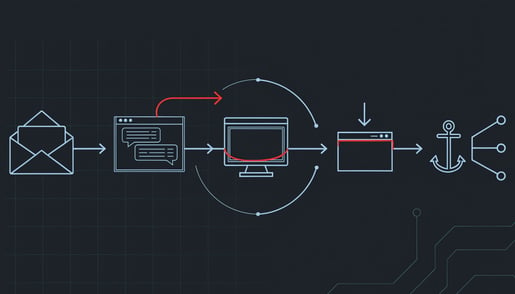
ClickFix attacks depend on a user pasting and running an attacker-supplied command, which then calls trusted Windows binaries such as PowerShell, cmd.exe, and mshta to pull down and execute a payload. Because those binaries are signed and present by default, the activity can blend into normal administrative work.
Nine vulnerability identifiers have been disclosed affecting the Kiloview E3 NDI encoder: CVE-2026-92450, CVE-2026-96616, CVE-2026-105265, CVE-2026-107861, CVE-2026-109122, CVE-2026-110243, CVE-2026-110491, CVE-2026-110825, and CVE-2026-111100.