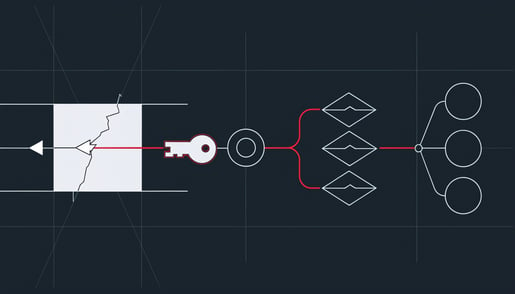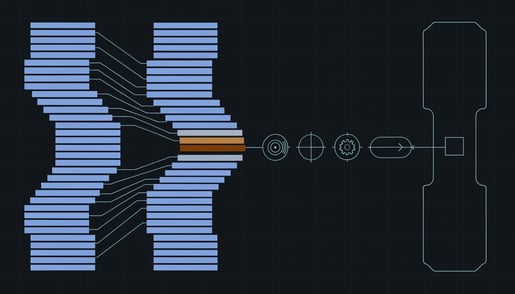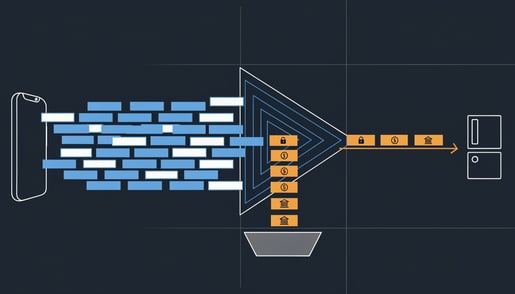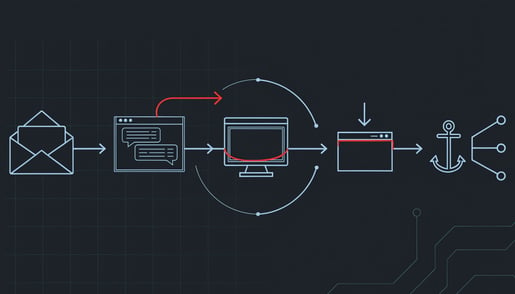
A malware family that researchers call TWINLOOT routes its stolen data and its instructions through Microsoft's own cloud services: SharePoint, Teams and the Microsoft Graph API. Your staff uses those platforms every day, and your security tools are required to trust them. A firewall or web filter is built to flag traffic to unfamiliar servers an attacker owns, and this traffic never goes to one.
The Ontinue Cyber Defense Center found the framework in July, and analysis published by CSO Online describes how it works. For a firm running Microsoft 365, that means the controls most businesses count on to catch an intrusion cannot see this one.
Why the usual defenses miss it
Blocklists, domain-reputation feeds, and web filtering all work on the premise that malicious traffic goes somewhere suspicious. TWINLOOT sends it to Microsoft instead. It polls a SharePoint drive for commands, tunnels remote access over Teams call infrastructure, and makes Graph API calls that read, on your network logs, as a normal Microsoft Edge process talking to Microsoft. There is no attacker-owned domain anywhere in the chain for a blocklist to catch.
The second gap adds cost. The malware authenticates to a Microsoft tenant the attacker controls, so no sign-in event, no consent grant, and no audit record appears in your Entra ID logs. When an investigation opens, the identity trail your responders normally start from is not there. They work from endpoint and network evidence alone, which typically lengthens the engagement and raises the hours billed by outside forensics.
What it puts within reach
Once the operator has a foothold, connections to internal file shares, remote-desktop interfaces, and management consoles appear to come from a workstation your controls already consider healthy. For a professional-services firm, the assets one authenticated hop away tend to be the sensitive ones: file shares holding client documents, contracts, and financial records; administrative interfaces; and the backup systems you would rely on to recover.
The missing sign-in trail also creates a compliance problem. Under most breach-notification rules, you can only scope what your records let you reconstruct. If the sign-in trail an investigator would normally use to determine which accounts and which data were reached is absent, demonstrating the scope of an incident to a regulator, a cyber-insurance carrier or a client becomes harder. That missing evidence can matter as much as the technical breach.
Detection that watches behavior
“We block bad websites” is no defense against a technique that never visits a bad website. Detecting this class depends on watching behavior rather than destinations: a workstation reaching internal systems it has no business reaching, an Edge process making Graph API calls no user initiated, authentication patterns that do not match how a real person works. In environments Capstone manages, identity threat detection looks for deviations like these: the authentication behavior that a stolen credential produces, which a domain blocklist was never built to see.
No single tool makes a network immune. Put one question to your IT team: if an intrusion left no trace in your Microsoft 365 sign-in logs, what evidence would you have?
The full technical breakdown, including the SharePoint dead-drop, the Teams tunnel and the fake lock screen that harvests passwords without generating a help-desk ticket, is in our Threat Intelligence Center writeup. If you want to see what your business looks like from the outside, book 15 minutes for written security findings.