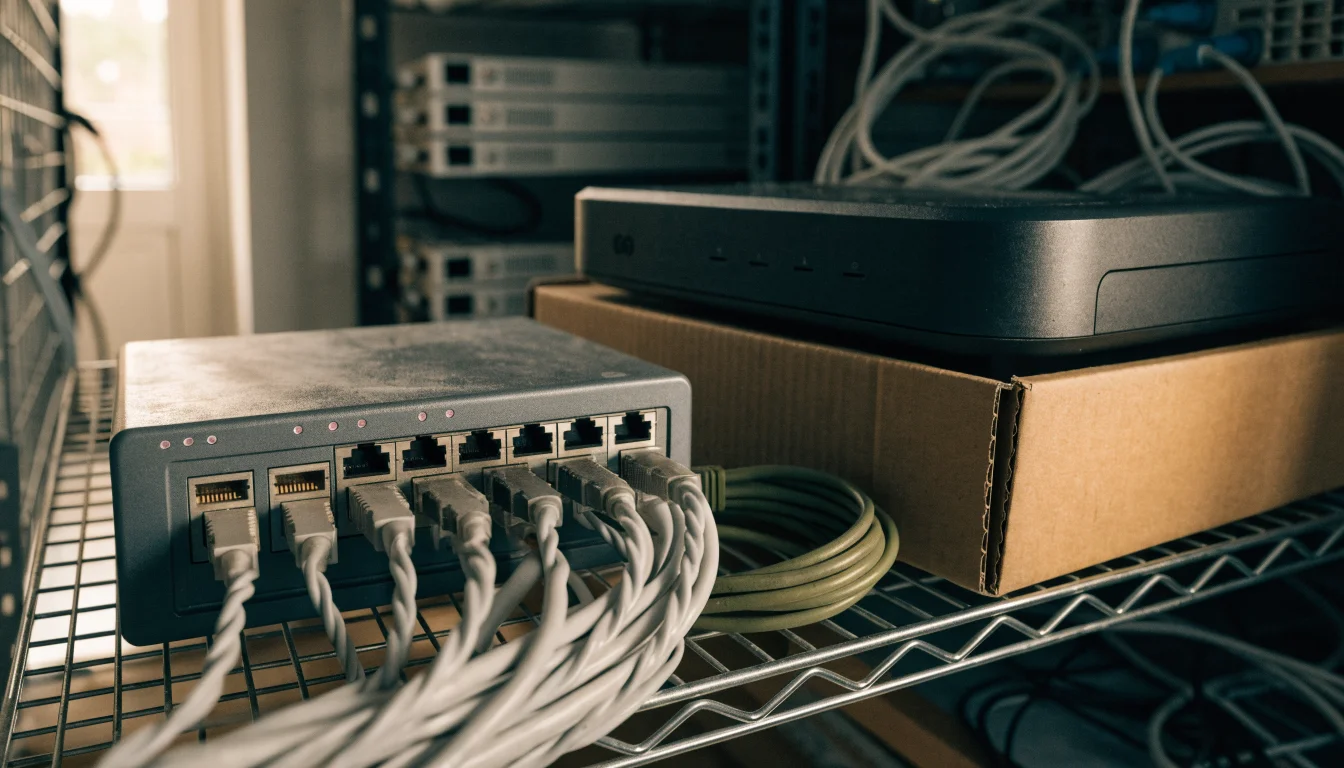
CISA has added CVE-2026-76466, a critical remote code execution flaw in Cisco Expressway, to its Known Exploited Vulnerabilities (KEV) Catalog after tagging it as actively exploited in attacks. Cisco released patches in late October. The flaw affects Cisco Expressway-C and Cisco Expressway-E devices configured in a cluster. These are the enterprise collaboration gateways, deployed as virtual machines or hardware appliances, that connect internal voice and video systems to outside networks and remote users.
Remote code execution means an attacker can run their own commands on a device from across the network. Here, no login is required. The flaw combines hard-coded credentials with incomplete validation of client certificates, so an unauthenticated attacker can execute operating system commands as root, the highest privilege level on the device. If your organization routes calls or video meetings through Expressway, root access gives an attacker full control of a system that sits between your internal network and the internet.
KEV inclusion is CISA's confirmation that attackers are using a flaw in real incidents. Under Binding Operational Directive (BOD) 26-04, Federal Civilian Executive Branch agencies were given three days to secure affected systems. The directive applies only to federal agencies, but CISA urged private-sector security teams to prioritize this flaw as well, and many organizations treat KEV deadlines as the benchmark for their own patch schedules. Cisco's PSIRT states it is not aware of active exploitation or public proof-of-concept code, so the vendor advisory and the CISA listing currently give your team different exploitation status. This is also the second Cisco flaw CISA has flagged in two weeks. It earlier added CVE-2026-20320, a high-severity vulnerability in Cisco BroadWorks, with a federal remediation deadline of November 24.
How the CVE-2026-20320 Remote Code Execution Vulnerability Works
The Cisco Expressway flaw that CISA added to the KEV Catalog is tracked as CVE-2026-76466. CVE-2026-20320 is a separate, high-severity Cisco BroadWorks vulnerability that CISA flagged as exploited two weeks earlier. F6's exploitation report cites the identifier CVE-2026-7646 while describing the same Expressway activity. This breakdown covers the Expressway bug first and the BroadWorks activity at the end.
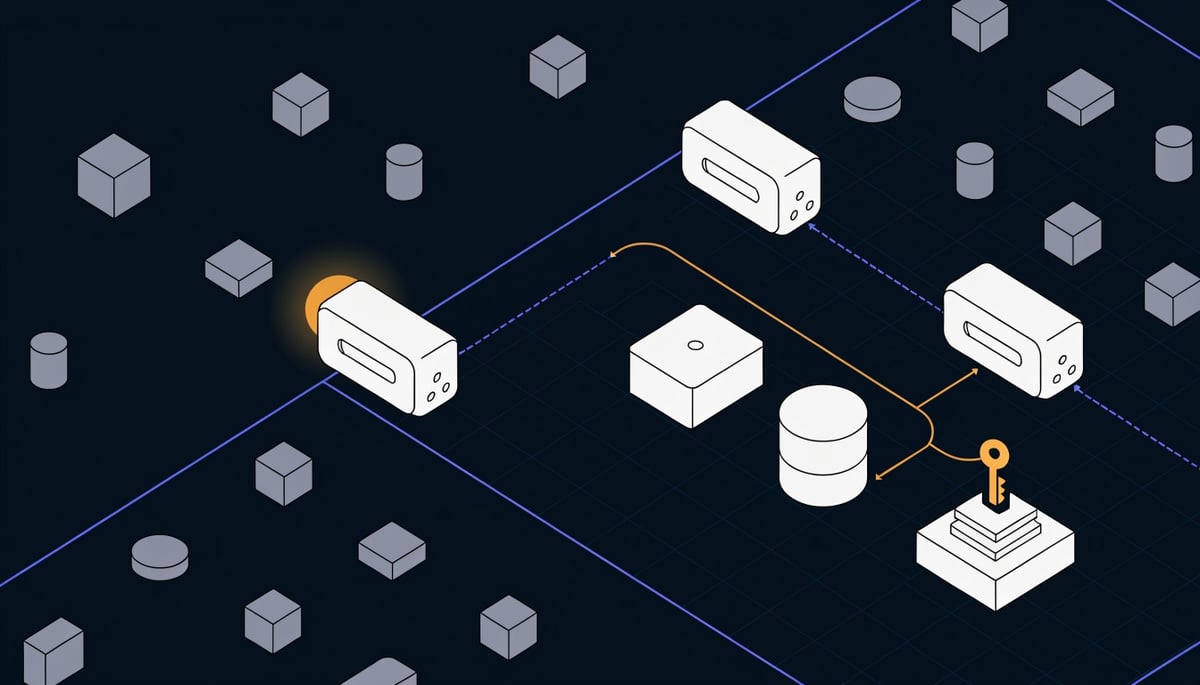
The vulnerable component is the database service that clustered Expressway nodes use to communicate with each other. According to Cisco, an attacker who holds the required cookies can connect to that service and invoke specific remote procedure call (RPC) commands. RPC is a mechanism that lets one system tell another to run a function, and here it ends in arbitrary operating system commands.
Cisco attributes the root cause to two weaknesses working together:
- Hard-coded credentials, meaning authentication material built into the product that every deployment shares and administrators cannot change.
- Incomplete client certificate validation, which means the service does not fully confirm that a connecting system is a trusted cluster peer.
Together, these let an outside party reach a service that should only answer other nodes in the same cluster. The Cisco text quoted in the source does not explain how the cookies are obtained, so that step is not publicly documented.
The attacker requirements are minimal. No authentication is required, and the attacker needs network access to the database service on a device running in a cluster configuration. Commands run as root, the highest privilege level on the underlying operating system. Cisco rates the flaw critical. The source does not provide a CVSS score or vector, and it does not list specific affected or fixed software versions. Check Cisco's advisory for the fixed release that applies to your deployment.
Cisco's PSIRT stated it was not aware of in-the-wild exploitation or public proof-of-concept code. CISA tagged the flaw as actively exploited anyway, and it has not released attack details. The most specific public account comes from Russian security company F6, which observed attackers using an unnamed AI assistant to exploit the flaw and gain root command execution on internet-exposed Expressway devices.
The intrusion F6 documented followed this sequence:
- Initial access (T1190, Exploit Public-Facing Application): the attackers compromised two internet-facing Expressway devices.
- Internal pivot: through one of those devices, they reached two more cluster nodes on the organization's internal network. This shows the cluster trust relationship carrying the attacker inward.
- Tooling (T1059.006, Python): after gaining root, they staged custom Python scripts for further lateral movement, which is the process of moving from one compromised system to others.
- Discovery (T1046, T1135): the scripts scanned the network and enumerated accessible SMB file shares.
- Lateral movement (T1021.006, WinRM): the scripts interacted with SQL Server and Windows Remote Management.
- Collection (T1213.003, Code Repositories): the attackers explored GitLab repositories to pull credentials and other sensitive data for exfiltration.
For a business, this means an edge collaboration appliance became a route into file servers, databases, and source code. Credentials taken from GitLab repositories can give attackers legitimate access to other systems, which makes the follow-on activity harder to tell apart from normal administration.
The source provides no indicators of compromise, such as IP addresses, file hashes, or script names, and it does not attribute the Expressway attacks to a named threat actor.
The BroadWorks flaw, CVE-2026-20320, has its own exploitation record. Threat intelligence firm Malbear Labs reported that a Chinese-speaking threat actor abused it in autonomous AI-driven attacks against a European telecommunications provider and 13 organizations that used that provider's data centers and cloud infrastructure. CISA set a November 24 patch deadline for federal agencies on that flaw. Taken together, the two cases show attackers using AI tooling against Cisco communications infrastructure in back-to-back campaigns.
What Compromise of a Cisco Network Device Means for Your Organization
F6 researchers documented what root access on a Cisco Expressway gateway leads to in practice. The attackers first compromised two internet-facing Expressway devices, then used one of them to reach two additional cluster nodes on the organization's internal network. From there they built tooling for lateral movement (moving from one compromised system to others inside the same network) and targeted credentials and other sensitive data.
For your organization, this means the collaboration gateway can serve as the attacker's way into the internal network. Once that gateway falls, the systems behind it are exposed to the same attacker.
Network edge devices attract attackers for a few consistent reasons. Your Expressway cluster sits directly in the path of voice and video traffic between your internal systems and the outside world. It is trusted by internal nodes, and it runs as a virtual machine or hardware appliance that usually cannot host the endpoint detection agents installed on your laptops and servers. Activity on the device itself can go unnoticed for longer than activity on a workstation.
According to F6, the attackers used custom Python scripts to do the following after gaining root:
- Scan the internal network to map reachable systems
- Discover accessible SMB shares, where file servers often hold documents and configuration files
- Interact with SQL Server and WinRM, giving them paths into databases and remote Windows administration
- Explore GitLab repositories to pull credentials and other sensitive information
Each of these maps to a business consequence. Source code repositories frequently contain API keys, service account passwords, and deployment secrets, so a GitLab exposure can extend the compromise into cloud services and production systems. Database access through SQL Server puts customer and financial records within reach. With root on a gateway that carries your calls and video meetings, an attacker is also positioned to observe or disrupt those communications, and to keep a foothold that survives password resets on other systems.
F6 also reported that the attackers used an unnamed AI assistant to carry out the exploitation. That lowers the skill and time an attacker needs to go from a published advisory to working access, which shortens the period you have between disclosure and attempted exploitation.
The scale of potential exposure is significant. Censys observes nearly 14,900 Cisco Expressway hosts reachable from the internet, with no public data on how many have been patched. CISA has added 103 Cisco vulnerabilities to its exploited list since November 2021, and ransomware gangs have used seven of them. Cisco infrastructure flaws have a track record of moving from initial access into extortion operations.
The compliance picture depends on who you are. Federal Civilian Executive Branch agencies must secure affected systems within three days under Binding Operational Directive 26-04. Contractors that operate or connect to federal systems should expect agency customers to ask about their status. CISA explicitly urged private-sector defenders to prioritize this flaw, warning that such vulnerabilities "are a frequent attack vector for malicious cyber actors." If attackers reach databases or file shares holding personal, health, or financial data, your organization may face state breach notification deadlines, sector rules such as HIPAA, and contractual reporting obligations to clients.
Judging your own exposure starts with ownership. Expressway clusters are often run by the voice, video, or unified communications team, and those teams may sit outside your security team's patch cycle and visibility. Two questions decide much of your risk: which group owns these devices in your environment, and whether any Expressway node or its management interface is reachable from the internet. If you cannot answer both, your organization does not yet know its exposure to this flaw.
Patching and Hunting for CVE-2026-20320 on Cisco Devices
The most important step is to install Cisco's late-October fixed release on every Expressway-C and Expressway-E node in your clusters. That includes the nodes that sit only on your internal network. In the F6 case, the internal nodes were reached through an exposed peer, so patching only the internet-facing gateways leaves part of the cluster open.
Immediately (within 24 to 48 hours)
- Build a complete inventory. List every Expressway deployment you run, both virtual machines and hardware appliances, and record whether each is clustered and which software version it reports in its administration interface. Censys counts nearly 14,900 Expressway hosts reachable from the internet, so confirm which of yours appear in that kind of external scan.
- Patch to the fixed release named in Cisco's security advisory for CVE-2026-76466. Do not rely on a version number quoted secondhand. Read the advisory for your software train.
- Check the advisory for documented workarounds. Public reporting does not describe one. Until patching is done, use firewall rules or ACLs so the cluster database service accepts connections only from the other cluster peers.
- Remove internet access to administration interfaces. Expressway-E has to face outside users for collaboration traffic. Its management interface does not, and it should be reachable only from a trusted admin network.
- If you run Cisco BroadWorks, treat CVE-2026-20320 with the same priority. CISA's federal deadline for that flaw was November 24, which is today.
Short-term (this week)
Patching closes the hole but does not remove an attacker who already has root. Cisco's PSIRT says it is not aware of exploitation, and CISA's KEV listing says otherwise. Plan your response around CISA's finding.
- Review traffic leaving Expressway nodes. These gateways carry voice and video signaling. Connections from them to internal file shares over SMB, to SQL Server, to WinRM endpoints, or to GitLab do not match their role. F6 tied each of those protocols to the attackers' follow-on activity.
- Look for unfamiliar files and processes on the appliances, especially Python scripts or network scanning tools that your administrators did not install.
- Compare current configurations against your last known-good backup, and check for local accounts that nobody on your team created.
- Review RPC and database connections between cluster nodes for any that come from addresses outside the cluster.
The source publishes no file hashes, IP addresses, or Snort signatures for this campaign. Your hunt therefore depends on behavior, which is why the outbound traffic review comes first. If you find signs of compromise, collect disk images and logs following Cisco TAC and CISA incident guidance before you reimage anything. Then rotate every credential the attackers could have reached. That includes secrets stored in GitLab repositories, SQL Server service accounts, and any domain accounts used for WinRM.
Longer-term
- Subscribe to the KEV catalog feed and connect it to your patch ticketing so new entries create work items automatically. CISA has added 103 Cisco flaws to KEV since November 2021, and ransomware gangs have used seven of them. The gap between Cisco's assessment and CISA's listing on this flaw shows why vendor statements alone should not set your patch priority.
- Segment the management plane. Place cluster replication and administrative traffic on a dedicated network segment that user subnets and the internet cannot reach.
- Forward Expressway system and audit logs to your SIEM. Alert on new outbound destinations, logins from new sources, and configuration changes made outside approved maintenance windows.
Assign an owner to each of these items and record their completion dates in your vulnerability management tracker.
Key Takeaway for Cisco Administrators
CISA confirms that attackers are exploiting CVE-2026-76466, the critical Cisco Expressway flaw, in the wild, even though Cisco's own PSIRT had not seen exploitation when it released fixes. Federal civilian agencies were given three days to secure affected systems under BOD 26-04, and CISA asked private-sector teams to give the flaw the same priority. If your organization runs clustered Expressway-C or Expressway-E nodes, put them first in your patching queue. The related BroadWorks flaw, CVE-2026-20320, carried a November 24 deadline for federal agencies, so two Cisco collaboration products now sit on the same short list of confirmed targets.
The single most important action is to identify every Expressway node you own and upgrade each one to the fixed release Cisco published in late October. Where a node cannot be upgraded at once, apply the interim guidance in Cisco's advisory. Then check that device for signs it was accessed before the fix, because the documented intrusions started with root access on the gateway itself. Completing this keeps the voice, video, and remote access traffic your staff depend on running, and it closes a path to the internal systems behind your gateway.
If you are unsure whether your gateways are clustered or patched, whoever manages your Cisco voice and video platform (an internal team or an outside provider) can confirm the software version on each node. After that, a security assessment can help you see where you stand more broadly. It is a 15-minute call followed by written findings on five areas: remote access, security controls, dark web exposure, phishing risk, and employee training readiness.