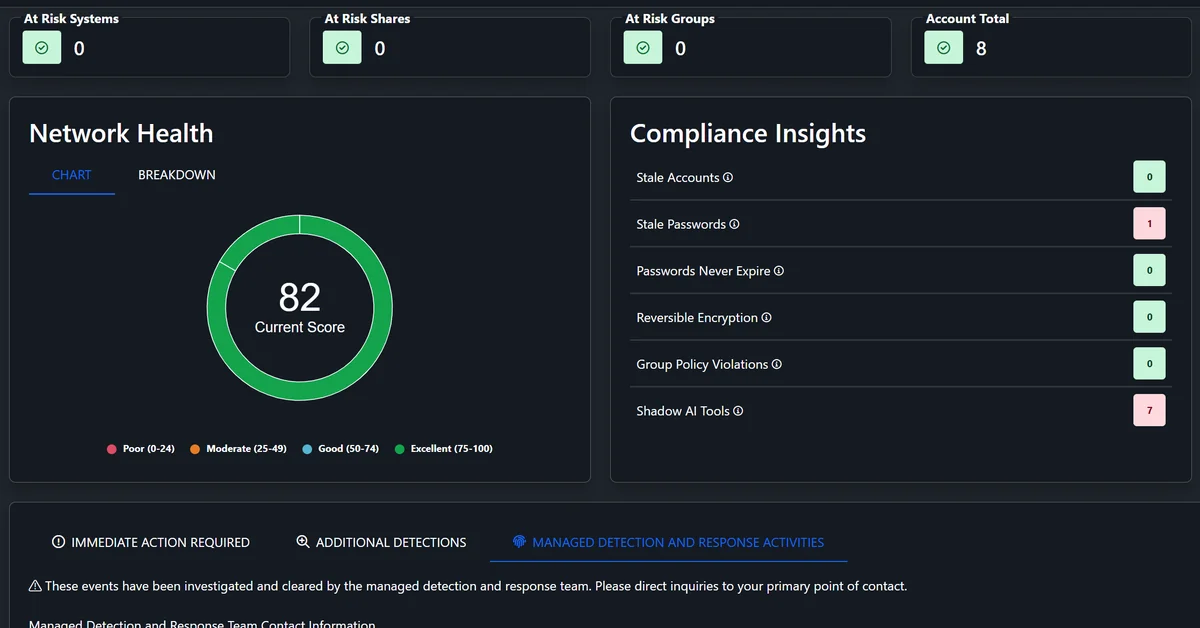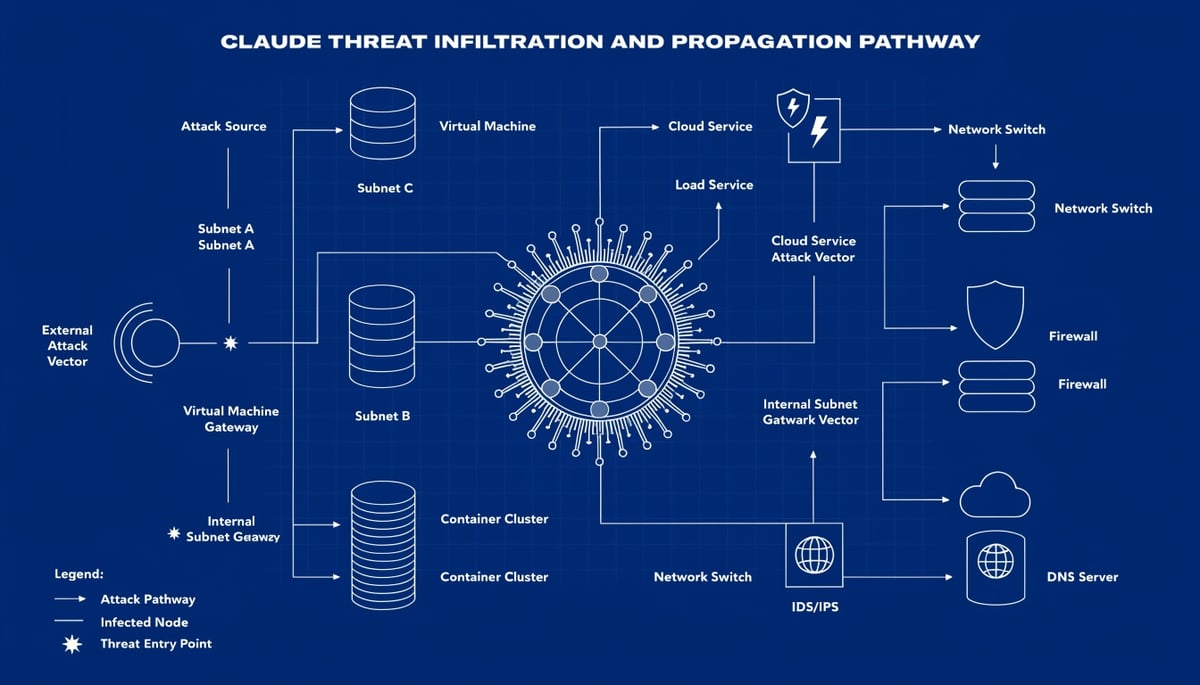
Organizations worldwide face an unprecedented security blind spot as unauthorized AI models infiltrate corporate networks, creating persistent channels for data extraction that bypass traditional security controls. The discovery of systematic scanning for AI infrastructure components—including Claude, OpenAI, and Hugging Face deployments—reveals a critical vulnerability in enterprise security postures that extends far beyond conventional malware threats. (Source: Isc)
Key Insight: The discovery of systematic scanning for AI infrastructure components—including Claude, OpenAI, and Hugging Face deployments—reveals a critical vulnerability in enterprise security postures that extends far beyond conventional malware threats.
When employees deploy AI models without IT oversight, they inadvertently create sophisticated data processing endpoints that operate with legitimate user permissions. These shadow AI deployments process sensitive corporate information—customer records, financial data, intellectual property—through external systems that exist completely outside organizational security boundaries.
The financial exposure from unauthorized AI processing dwarfs traditional breach scenarios. A single misconfigured AI model with access to customer databases can continuously exfiltrate and process millions of records without triggering security alerts. Under GDPR, processing personal data through unauthorized AI systems constitutes a reportable breach, with penalties reaching 4% of global annual revenue. Healthcare organizations face additional HIPAA violations at $2 million per incident when patient data flows through unsanctioned AI endpoints.
Unlike ransomware that announces its presence or malware that damages systems, shadow AI infrastructure operates silently as a legitimate business tool. Employees believe they're improving productivity while unknowingly channeling corporate data through external processing systems. The scanning activity targeting configuration files like /.openclaw/secrets.json and /.claude/.credentials.json demonstrates attackers understand this vulnerability—they're not looking for traditional backdoors but for AI systems already granted access to valuable data.
Key Insight: The scanning activity targeting configuration files like /.openclaw/secrets.json and /.claude/.credentials.json demonstrates attackers understand this vulnerability—they're not looking for traditional backdoors but for AI systems already granted access to valuable data.
The compliance implications extend beyond data protection regulations. Financial services firms violating SEC requirements for algorithmic decision-making face enforcement actions averaging $4.2 million. Insurance companies using unauthorized AI for claims processing risk state regulatory sanctions and license suspensions. Manufacturing organizations with AI-processed trade secrets lose intellectual property protections under court precedent requiring "reasonable security measures."
"A single misconfigured AI model with database access can continuously exfiltrate millions of records without triggering security alerts."
The persistent nature of AI infrastructure compounds the risk profile. Traditional malware requires command-and-control servers that security teams can block. Shadow AI models, however, connect to legitimate cloud services that organizations cannot simply blacklist. An attacker who compromises AI credentials gains a permanent, authenticated channel to corporate data that survives password resets, system patches, and even complete endpoint reimaging.
Board-level executives must recognize that AI adoption without governance creates material risk to shareholder value. The reputational damage from AI-processed data appearing in competitor training sets or public models cannot be reversed. Customer trust evaporates when proprietary conversations surface in AI-generated content across the internet. Strategic plans, merger discussions, and competitive intelligence processed through unauthorized AI become permanently embedded in external systems beyond corporate control.
The scanning patterns observed since March 2026 indicate threat actors have moved beyond opportunistic attacks to systematic enumeration of AI infrastructure. They understand that compromising one AI deployment provides exponentially more value than traditional endpoint compromise—continuous data access, processing capabilities, and persistence that conventional attacks cannot achieve.
How Unauthorized Deployments Establish Persistent Access
The technical mechanics behind these AI infrastructure attacks reveal a sophisticated understanding of how modern machine learning deployments operate within corporate environments. When the scanning activity from IP 81.168.83.103 identifies exposed endpoints through paths like /.openclaw/workspace/db.sqlite or /.cache/huggingface/token, attackers gain visibility into the entire AI deployment architecture.
These probes specifically target configuration files and credential stores that developers commonly leave exposed during rapid prototyping phases. The /.claude/.credentials.json and /openai/credentials.json paths contain API keys that grant full access to organizational AI models—keys that often carry unlimited usage quotas and administrative privileges.
Once attackers locate these exposed endpoints, they deploy specialized bots designed to maintain persistent access through legitimate API channels. The clawdbot and moltbot configurations discovered in the scanning patterns represent automated systems that masquerade as normal AI model interactions. These bots generate API traffic patterns indistinguishable from legitimate model queries, making detection through traditional network monitoring nearly impossible.
The preference for bot-based persistence stems from their minimal resource footprint and ability to operate within expected behavioral parameters. Unlike traditional malware that triggers anomaly detection through unusual process creation or file system modifications, these bots communicate exclusively through documented API endpoints. They leverage the same authentication tokens and request formats that legitimate applications use, creating what security teams perceive as normal business operations.
The workspace databases targeted through paths like /.openclaw/workspace/chroma.db contain vector embeddings of processed corporate data—essentially mathematical representations of every document, email, and file that passed through the AI system. Accessing these databases provides attackers with pre-processed intelligence about organizational knowledge, customer information, and proprietary methodologies without triggering data loss prevention systems.
Network patterns that reveal these compromised deployments include sustained connections to IP addresses outside typical cloud provider ranges, particularly the AS 20860 network block where 81.168.83.103 resides. The scanning activity shows distinctive timing patterns, with concentrated bursts of activity—52 queries recorded between March 10 and April 13, 2026, peaking on April 3rd—followed by periods of dormancy designed to avoid rate limiting and detection thresholds.
Authentication anomalies manifest as API calls originating from geographic locations inconsistent with employee locations, requests during non-business hours that match automated bot schedules rather than human work patterns, and token usage that exceeds typical development or testing volumes. The ES|QL queries used to identify these patterns search for HTTP request bodies containing specific model identifiers, revealing attempts to enumerate available AI services across the infrastructure.
The lateral movement phase exploits trust relationships between AI services and other corporate systems. Since AI models require broad data access to function effectively, compromised model credentials often include permissions to databases, file shares, and cloud storage repositories. Attackers use these elevated privileges to expand their foothold, moving from AI infrastructure to core business systems while maintaining the appearance of legitimate model operations.
Detection: Finding Unauthorized Models Before Attackers Do
Security teams need immediate visibility into unauthorized AI deployments before attackers discover them. The systematic scanning activity targeting AI model configurations demands a three-phase detection strategy that identifies exposed endpoints, tracks suspicious API activity, and establishes continuous monitoring for shadow AI infrastructure.
Immediate Actions (Execute Today)
Start by scanning your external-facing infrastructure for exposed AI model endpoints. Use Shodan queries like http.html:"claude" port:8080 or http.html:"huggingface" country:US to identify publicly accessible deployments within your IP ranges. These searches reveal model interfaces that developers often expose during testing phases.
Deploy internal network scanners to probe for common AI service ports. Focus on ports 5000-5010 (typical Flask/FastAPI deployments), 8501 (Streamlit), and 7860-7870 (Gradio interfaces). When you discover active listeners, cross-reference them against your approved AI deployment inventory—any mismatches indicate shadow infrastructure requiring immediate investigation.
Search web server logs for the specific paths targeted by attackers:
grep -r "openclaw\|clawdbot\|moltbot" /var/log/nginx/grep -r "\.credentials\.json\|secrets\.json" /var/log/apache2/grep -r "huggingface/token" /var/log/httpd/
These searches identify both successful compromises and reconnaissance attempts. Pay particular attention to 200 response codes on credential files—these indicate exposed authentication materials.
Short-Term Detection Improvements (This Week)
Configure your API gateways to log all requests containing AI-related user agents. Watch for patterns like clawdbot/1.0, moltbot-scanner, or unusual token refresh frequencies exceeding 100 requests per hour from single sources. These signatures indicate automated credential harvesting attempts.
Implement ES|QL queries in your SIEM to track AI-related scanning patterns. The query structure WHERE http.request.body.content LIKE "*openclaw*" combined with temporal bucketing reveals scanning campaigns. Set alerts when single IPs generate more than 10 AI-related probes within 24-hour windows.
Audit all service accounts and employee API keys for unauthorized AI platform access. Check billing dashboards for OpenAI, Anthropic, and Hugging Face—unexpected usage spikes often reveal compromised credentials before traditional security tools detect the breach. Review model download histories in Hugging Face repositories; unauthorized downloads of large language models indicate potential data exfiltration preparations.
Long-Term Monitoring Architecture
Establish a baseline inventory of all authorized AI deployments, including their network locations, exposed ports, and legitimate access patterns. Document which teams operate AI models, their business purposes, and expected data flows. This baseline enables anomaly detection when new models appear outside approved channels.
Deploy honeypot AI endpoints using names like /.openclaw/workspace/ or /.claude/settings.json that return fake credentials while logging access attempts. These decoys provide early warning of targeted scanning campaigns while revealing attacker techniques and tool signatures.
Configure network monitoring to alert on outbound connections to AI model repositories during non-business hours. Attackers often exfiltrate data by uploading it to compromised Hugging Face repositories or using stolen API keys during maintenance windows when security teams have reduced coverage.
Three-Phase AI Security Detection Strategy
- Scan external infrastructure with Shodan queries
- Probe internal networks for AI service ports (5000-5010, 8501, 7860-7870)
- Search web logs for attack signatures
- Configure API gateway logging for AI user agents
- Implement SIEM queries for scanning patterns
- Audit service accounts and API keys
- Establish baseline for shadow AI infrastructure
- Deploy automated detection rules
- Monitor for credential harvesting attempts
Containment and Remediation: Immediate Actions and Priorities
When attackers discover exposed AI infrastructure through scanning campaigns, the window between detection and data exfiltration narrows to hours. The systematic probing activity that began on March 10, 2026, demonstrates attackers' understanding that AI deployments contain concentrated access to organizational knowledge—making rapid containment essential.
Critical Actions (First 2 Hours)
Immediately isolate any systems responding to probes for /.openclaw/workspace/db.sqlite or /.clawdbot/moltbot.json paths. These endpoints represent active AI model deployments that process corporate data through external inference engines. Disconnect affected servers from network segments containing sensitive databases, file shares, or customer data repositories.
Revoke all API keys stored in exposed configuration files. The scanning patterns targeting /.claude/.credentials.json and /openai/credentials.json indicate attackers seek authentication tokens that grant unlimited model access. These credentials often carry production-level permissions that bypass rate limiting and usage monitoring. Generate new API keys only after implementing strict IP allowlisting and request quotas.
Audit data access logs for compromised AI models to understand exposure scope. Check model inference logs, database query histories, and file system access records from January 29, 2026—when scanning from 81.168.83.103 first began. Document which datasets, customer records, or intellectual property these models processed during the compromise window.
High Priority Actions (First 24 Hours)
Search for lateral movement artifacts in bot execution logs and model inference records. The /.clawdbot/moltbot.json configuration files contain bot orchestration settings that reveal how attackers chain multiple AI models together for automated data extraction. Review system logs for unusual model invocation patterns, especially batch processing of sensitive documents or databases.
Remove unauthorized service accounts created for AI model operations. These bot accounts often possess elevated privileges for accessing training data, vector databases, and knowledge repositories. Check for accounts with names containing "claude," "openai," or "huggingface" variants that appeared after March 10, 2026.
Reset credentials for any user accounts that authenticated to compromised AI endpoints. Model deployments frequently store user session tokens in local caches like /.cache/huggingface/token for performance optimization. Attackers harvesting these tokens gain persistent access to legitimate user sessions across multiple systems.
Medium Priority Actions (First Week)
Rebuild affected systems from known-clean backups predating January 29, 2026. The persistent scanning activity indicates potential rootkit installation or backdoor deployment beyond simple configuration theft. Preserve forensic images of compromised systems before rebuilding to support incident investigation.
Implement network segmentation specifically for AI model deployments. Create isolated VLANs for development, staging, and production AI workloads with strict firewall rules blocking direct internet connectivity. Require all model API calls to route through authenticated proxy servers that log and rate-limit requests.
Deploy API gateway authentication for all AI model endpoints. Configure mutual TLS authentication requiring both client certificates and API keys for model access. Establish request signing mechanisms that prevent replay attacks even if credentials become compromised. Set maximum token limits per request to prevent bulk data extraction through single API calls.
Preventing Redeployment: Technical Controls That Actually Work
Network segmentation alone won't stop attackers from finding shadow AI deployments when developers bypass security controls through direct internet connections. The scanning patterns observed since March 10, 2026, reveal attackers understand that AI models require persistent external connectivity—making traditional perimeter defenses ineffective against this threat vector.
Effective prevention requires technical controls that operate at multiple enforcement points, creating defense-in-depth specifically tailored to AI infrastructure risks.
Network-Level Enforcement
Configure your firewall to explicitly whitelist AI service endpoints rather than relying on blacklist approaches. Create dedicated security groups that only permit connections to:
- api.openai.com on port 443
- api.anthropic.com on port 443
- huggingface.co on ports 443 and 22 (for model downloads)
- Your organization's approved model hosting platforms
Block all other outbound connections from development environments to prevent unauthorized model deployments. This approach ensures developers can only connect to pre-approved AI services that your security team has vetted.
Deploy inline traffic inspection rules that detect AI model signatures in HTTP headers. Configure your web application firewall with custom rules like:
if (http.request.uri.path contains "/.openclaw/" or http.request.uri.path contains "/.clawdbot/") then block
These rules prevent both inbound scanning attempts and outbound connections to unauthorized model repositories.
Application-Level Controls
Implement container image scanning that specifically flags AI model artifacts. Configure your CI/CD pipeline to reject deployments containing:
- PyTorch model files (*.pt, *.pth)
- TensorFlow checkpoints (*.ckpt)
- Hugging Face model directories (containing config.json and pytorch_model.bin)
- ONNX model files (*.onnx)
Require architectural review board approval for any application that includes machine learning libraries. Create a registry of approved AI frameworks and versions, then configure dependency scanners to alert on unauthorized packages like transformers, langchain, or llamaindex appearing in requirements.txt files.
Identity and Access Management
Configure your cloud provider's IAM policies to prevent unauthorized API key generation. In AWS, deploy this service control policy:
{"Effect": "Deny", "Action": ["bedrock:CreateModelCustomizationJob", "sagemaker:CreateEndpoint"], "Resource": "*", "Condition": {"StringNotEquals": {"aws:PrincipalOrgID": "o-approved-org-id"}}}
This prevents developers from creating AI endpoints without explicit organizational approval.
Enforce hardware token MFA for all API key generation workflows. Configure your identity provider to require FIDO2 authentication specifically for accessing AI service consoles—password plus SMS isn't sufficient when API keys grant unlimited model access.
Proactive Monitoring Configuration
Deploy network behavior analytics that baseline normal development traffic patterns, then alert on anomalies indicating model deployment. Configure alerts for:
- New processes listening on ports 5000, 8000, 8080 (common model serving ports)
- Sustained outbound HTTPS connections exceeding 100MB (model downloads)
- DNS queries to new AI-related domains not in your approved list
- Service accounts created with names containing "bot", "model", or "inference"
These technical controls create multiple enforcement points that prevent unauthorized AI deployments before they become attack vectors. By implementing these specific configurations, you establish preventive barriers that stop shadow AI infrastructure from taking root in your environment.
Compliance and Data Protection Implications
The discovery of unauthorized AI model deployments creates immediate regulatory exposure that extends beyond traditional data breach scenarios. When employees deploy Claude, OpenAI, or Hugging Face models without authorization, they establish data processing relationships that violate fundamental compliance requirements across multiple regulatory frameworks.
GDPR violations emerge the moment corporate data flows through unauthorized AI endpoints. The scanning activity targeting credential files like /.claude/.credentials.json reveals deployments that process European citizen data without proper data processing agreements. Each API call to external AI services constitutes an international data transfer—requiring explicit consent and contractual safeguards that shadow deployments never establish. The European Data Protection Board considers AI model training and inference as high-risk processing activities, mandating Data Protection Impact Assessments that unauthorized deployments cannot satisfy.
Financial services organizations face additional exposure under PCI DSS when payment card data reaches AI models. The probes for /.openclaw/workspace/db.sqlite databases suggest attackers understand these deployments often contain local data caches—including transaction histories, customer identifiers, and authentication tokens that violate PCI's strict data localization requirements.
Healthcare entities confront HIPAA violations when patient records flow through consumer AI services. Medical professionals using AI assistants for clinical documentation inadvertently transmit Protected Health Information to systems lacking Business Associate Agreements. The systematic scanning since January 29, 2026, indicates attackers recognize healthcare deployments as particularly valuable targets—medical records command premium prices on underground markets.
SOC 2 auditors classify unauthorized AI deployments as critical control failures. The presence of exposed configuration files containing API keys demonstrates absence of access management controls, encryption standards, and audit logging capabilities that SOC 2 Type II certification requires. Organizations cannot attest to data confidentiality when processing occurs through unmonitored external systems.
Discovery triggers mandatory disclosure obligations that compound regulatory exposure. Under California's Consumer Privacy Act, organizations must notify affected individuals within 72 hours when personal information processes through unauthorized systems. The scanning campaign's duration—active since March 10, 2026—creates retroactive notification requirements for all data processed during this period.
Legal teams must immediately assess whether breach notification thresholds have been met. The presence of database files and credential stores in targeted paths suggests attackers gained capability to access structured data repositories. Even unsuccessful access attempts trigger notification requirements in states like New York when systems contain Social Security numbers or driver's license information.
Documentation requirements demand forensic-level detail about unauthorized processing activities. Regulators expect comprehensive inventories listing: which AI models processed corporate data, what information types flowed through each endpoint, how long deployments operated before discovery, and whether data retention occurred within model training caches.
The financial penalties for undisclosed AI processing exceed traditional breach scenarios. GDPR fines reach 4% of global annual revenue when organizations cannot demonstrate lawful basis for AI processing. CCPA statutory damages multiply by affected record counts—a single exposed database containing California resident information triggers minimum penalties of $100 per record.
Insurance carriers increasingly exclude AI-related incidents from cyber liability coverage when deployments violate acceptable use policies. The systematic nature of these scanning campaigns demonstrates this represents an industry-wide risk that insurers actively monitor through claims data.