Why Cyber Insurers Are Reshaping 2026 Coverage Requirements
The cyber insurance industry is undergoing a fundamental transformation in how it evaluates and prices risk, driven by an unprecedented surge in claim payouts and evolving attack patterns. Insurance carriers are no longer content with basic security questionnaires and annual assessments. Instead, they're mandating specific technology deployments as prerequisites for coverage, fundamentally altering how organizations approach their security investments.
The catalyst for this shift lies in the stark financial reality facing insurers. Phishing-related losses now account for 49% of all cyber insurance payouts, a dramatic increase from just 18% in 2024, according to Resilience's claims data. This explosion in damages, coupled with the 30 percentage point increase in phishing attack costs, has forced carriers to move beyond traditional risk assessment models.
Insurance companies are witnessing firsthand how artificial intelligence is amplifying the effectiveness of social engineering attacks. The sophistication of AI-generated phishing campaigns has rendered many traditional security controls obsolete, prompting insurers to demand more robust authentication mechanisms. This technological arms race between attackers and defenders has placed insurance carriers in an unexpected position: becoming de facto security consultants who dictate which technologies their policyholders must deploy.
The financial pressures extend beyond phishing incidents. Business interruption claims represent 40% of total losses for carriers like Resilience, primarily stemming from ransomware events and system failures. These prolonged outages translate into millions in claim payouts, forcing insurers to reassess their underwriting criteria. The insurance industry's response has been swift and decisive: companies without specific security controls now face either prohibitive premiums or outright denial of coverage.
Claims data reveals another troubling trend that's reshaping coverage requirements. Organizations with exposed VPN login panels are three to four times more likely to experience a cyber incident, according to Coalition's analysis. This correlation between specific technology configurations and breach likelihood has given insurers unprecedented insight into which security controls actually prevent losses versus those that merely provide a false sense of security.
The shift toward prescriptive technology requirements represents a departure from the insurance industry's traditional approach of risk transfer. Carriers are now actively working to prevent claims rather than simply paying them out. This proactive stance manifests in detailed technology audits during the underwriting process, with insurers examining not just whether security tools exist, but how they're configured, managed, and monitored.
Perhaps most significantly, insurance companies are leveraging their unique position to drive industry-wide security improvements. With visibility across thousands of incidents and claims, carriers possess unparalleled data about what actually works in preventing breaches. This intelligence is being translated into concrete requirements that organizations must meet to maintain coverage. The message from insurers is clear: deploy these specific technologies and configurations, or face the financial consequences of going uninsured in an era where the average data breach costs millions.
Core Technology Stack: Identity and Access Controls
The transformation in cyber insurance requirements reflects a fundamental shift in how carriers evaluate identity infrastructure. Role-based access controls have emerged as the single most effective technology for limiting breach damage, with insurers now offering premium discounts of up to 15% for organizations demonstrating mature identity governance.
The economics driving this prioritization are straightforward. When attackers compromise an account with excessive privileges, the average claim payout increases by 280%, according to industry data. Conversely, organizations with granular permission models experience 60% lower remediation costs even when breaches occur.
Insurance underwriters now scrutinize three specific aspects of identity architecture during policy evaluations. First, they examine privilege escalation paths, particularly focusing on service accounts that often retain administrative rights long after their original purpose expires. Second, they assess the frequency of access reviews, with quarterly audits becoming the minimum acceptable standard. Third, they evaluate the implementation of just-in-time access provisioning, where elevated privileges exist only for the duration required.
Hardware-based authentication represents another critical requirement reshaping coverage terms. Physical security keys using FIDO2 standards have demonstrated a 100% success rate in preventing account takeovers in Google's internal deployment across 85,000 employees. This real-world validation has prompted insurers to classify organizations without hardware tokens as "high-risk" starting in Q2 2026.
The distinction between authentication methods has become particularly pronounced in premium calculations. Organizations relying solely on SMS-based two-factor authentication face surcharges averaging 8-12%, while those implementing app-based authenticators see neutral pricing. Companies deploying FIDO2-compliant hardware keys receive the most favorable terms, with some carriers offering dedicated coverage enhancements for passwordless environments.
Privileged access management (PAM) platforms have transitioned from optional to mandatory for organizations with more than 500 employees or those handling regulated data. Insurers specifically require PAM solutions that provide session recording, automated password rotation, and anomaly detection capabilities. The absence of PAM now triggers automatic coverage limitations, particularly for business email compromise and insider threat scenarios.
Certificate-based authentication for machine identities represents an emerging focus area. With non-human identities outnumbering human accounts by ratios exceeding 45:1 in cloud environments, insurers recognize that traditional MFA approaches leave significant gaps. Organizations implementing mutual TLS authentication and automated certificate lifecycle management receive preferential treatment during underwriting.
The financial incentives for robust identity controls extend beyond premium reductions. Carriers now offer "identity breach forgiveness" clauses, waiving deductibles entirely for organizations that can demonstrate comprehensive identity verification at the time of an incident. This includes proof of continuous authentication, risk-based access decisions, and behavioral analytics integration.
Passwordless authentication initiatives receive particular attention from underwriters, who view the elimination of credentials as removing the primary attack vector entirely. Organizations that have achieved 80% or greater passwordless adoption qualify for enhanced coverage limits and expedited claim processing. The insurance industry's embrace of zero-knowledge proof systems and decentralized identity verification suggests these technologies will become standard requirements by 2027.
Detection and Response Infrastructure
Insurance carriers now evaluate detection infrastructure through a fundamentally different lens than traditional security assessments. Rather than simply verifying the presence of monitoring tools, underwriters examine actual detection velocity metrics, false positive rates, and documented response times to determine premium structures. Organizations demonstrating sub-15-minute detection times for ransomware activities receive premium reductions averaging 22%, while those lacking continuous monitoring face surcharges exceeding 40%.
The shift toward managed detection and response (MDR) platforms represents the most significant change in insurer requirements. Coalition's incident data reveals that businesses with professionally managed MDR services file 73% fewer claims than those running unmonitored EDR solutions. This disparity stems from a critical operational reality: purchasing detection technology without dedicated monitoring creates what insurers term "security theater" - the appearance of protection without meaningful risk reduction.
Modern EDR platforms must demonstrate specific capabilities to satisfy insurance underwriting criteria. Behavioral analysis engines that detect process injection, credential dumping, and living-off-the-land techniques now constitute baseline requirements. Insurers particularly scrutinize mean time to detection (MTTD) metrics, with organizations achieving sub-30-minute detection windows qualifying for enhanced coverage terms. The ability to automatically isolate compromised endpoints within 90 seconds of threat detection has become a differentiating factor in premium calculations.
Network detection and response (NDR) systems provide the lateral movement visibility that insurers increasingly demand. Organizations implementing NDR alongside EDR experience 84% faster containment of ransomware incidents, translating directly to reduced business interruption claims. Insurance assessors specifically evaluate NDR coverage across east-west traffic flows, encrypted communication analysis capabilities, and integration with identity systems for anomalous authentication pattern detection.
SIEM platform effectiveness now undergoes quantitative evaluation during insurance assessments. Underwriters examine correlation rule coverage against the MITRE ATT&CK framework, requiring documented detection logic for at least 70% of techniques relevant to the organization's threat profile. Log retention periods below 90 days trigger automatic premium increases, while organizations maintaining 365-day retention with automated threat hunting workflows receive preferential rates.
The financial impact of detection infrastructure on insurance economics proves substantial. Organizations with mature detection capabilities experience average claim payouts 67% lower than those relying solely on preventive controls. This reduction stems from faster containment limiting data exfiltration volumes, preventing ransomware encryption spread, and enabling recovery before operational impacts cascade. Insurance carriers now require quarterly detection capability assessments, including purple team exercises that validate sensor coverage and alert fidelity.
Integration between detection platforms emerges as a critical underwriting factor. Siloed security tools that require manual correlation increase incident response times by an average of 4.2 hours, directly correlating with higher claim severities. Insurers now mandate documented API integrations between EDR, NDR, and SIEM platforms, with automated playbooks for common attack scenarios. Organizations demonstrating orchestrated response capabilities that span endpoint isolation, network segmentation, and identity suspension within unified workflows qualify for premium discounts approaching 30%.
Emerging Priorities: AI-Driven Security and Resilience Tech
The insurance industry's evaluation criteria now extends beyond traditional security controls to encompass artificial intelligence-powered threat detection systems and automated resilience platforms. These technologies have transitioned from experimental investments to baseline expectations as carriers recognize their measurable impact on claim frequency and severity.
Machine learning algorithms designed for behavioral anomaly detection are commanding particular attention from underwriters. Insurance data shows organizations deploying AI-driven user and entity behavior analytics (UEBA) experience 67% fewer insider threat incidents compared to those relying solely on rule-based monitoring. The technology's ability to establish baseline patterns and flag deviations has proven especially valuable in detecting compromised service accounts that traditional signature-based tools miss.
Automated incident response orchestration represents another category moving rapidly from differentiator to requirement. Carriers are discovering that organizations with security orchestration, automation, and response (SOAR) platforms reduce their mean time to containment by an average of 78 minutes. This acceleration translates directly to smaller claim payouts, with automated response capabilities correlating to 45% lower business interruption costs across the insurance portfolio.
Supply chain risk monitoring platforms have emerged as a critical underwriting factor following the cascade of vendor-related breaches. Insurers now require continuous third-party risk assessment capabilities, particularly for organizations with more than 50 critical vendors. The technology must provide real-time alerts about vendor compromises, vulnerability disclosures affecting shared infrastructure, and changes in supplier security postures. Organizations demonstrating mature supply chain visibility receive premium credits averaging 18%, while those lacking such capabilities face exclusions for vendor-related incidents.
Cyber resilience platforms that simulate attack scenarios and measure recovery capabilities are reshaping how insurers assess organizational preparedness. These platforms go beyond traditional disaster recovery testing by introducing controlled chaos engineering principles to validate defensive assumptions. Insurance carriers particularly value platforms that generate quantifiable resilience scores based on recovery time objectives, data restoration capabilities, and alternative operational procedures.
The integration of AI into email security gateways has become a specific focus area as traditional filters prove inadequate against generative AI-crafted phishing campaigns. Natural language processing models that analyze writing patterns, contextual anomalies, and sender behavior are demonstrating 94% accuracy in detecting AI-generated business email compromise attempts. Insurers are adjusting their models to reflect this enhanced protection, with organizations deploying advanced email AI receiving preferential terms.
Cloud security posture management (CSPM) tools enhanced with machine learning capabilities now factor prominently in insurance assessments. These platforms continuously scan cloud environments for misconfigurations, exposed credentials, and compliance violations. The automated remediation features particularly interest underwriters, as they eliminate the lag between detection and correction that often enables successful breaches.
Perhaps most significantly, insurers are beginning to require proof of continuous validation rather than point-in-time assessments. Technologies that provide ongoing security ratings, automated penetration testing, and breach simulation exercises are becoming mandatory for certain coverage tiers. This shift reflects the insurance industry's recognition that static security postures cannot address dynamic threat landscapes.
Implementation Roadmap: Prioritizing Deployments for Coverage Advantage
Organizations face a critical sequencing challenge when deploying insurance-mandated technologies. The financial impact of proper implementation timing can mean the difference between a 30% premium reduction and complete coverage denial. Strategic deployment requires balancing immediate risk reduction against integration complexity and budget realities.
Phase one deployments should focus on technologies that deliver immediate premium benefits while requiring minimal infrastructure changes. Immutable backup systems represent the optimal starting point, offering average premium reductions of 18% within the first renewal cycle. These systems can be implemented independently of existing infrastructure, typically requiring only 4-6 weeks for full deployment across mid-sized enterprises.
The financial mathematics favor this approach decisively. Organizations implementing immutable backups first see immediate cost recovery through premium savings averaging $47,000 annually for companies with $50 million in revenue. More critically, these systems provide protection against catastrophic losses while other security layers are being built.
Phase two should prioritize legacy system replacement concurrent with network modernization initiatives. Insurance carriers now apply surcharges of up to 35% for organizations maintaining systems older than seven years. The replacement timeline becomes particularly urgent for companies running Windows Server 2012 or earlier versions, as these systems trigger automatic coverage limitations in 82% of new policies.
Budget-conscious organizations should leverage virtualization strategies during this phase. Converting physical legacy systems to virtual machines provides an intermediate step that satisfies insurer requirements while spreading capital expenditures across multiple quarters. This approach reduces immediate replacement costs by approximately 60% while maintaining compliance with coverage requirements.
The third phase introduces zero-trust network architecture through a progressive deployment model. Rather than attempting wholesale network replacement, organizations should implement software-defined perimeters for critical assets first. Insurance data indicates that protecting just 20% of high-value systems through zero-trust principles yields 70% of the potential premium reduction.
Integration challenges peak during this phase, particularly for organizations with distributed workforces. The solution lies in deploying secure access service edge (SASE) platforms that consolidate multiple security functions. This approach reduces integration points by 65% compared to traditional point-solution deployments while satisfying multiple insurance requirements simultaneously.
Phase four addresses the human element through security awareness platforms integrated with existing collaboration tools. Insurance carriers now require quarterly training verification, with automated platforms reducing administrative burden by 80%. Organizations should select platforms that provide real-time phishing simulation capabilities, as these demonstrate measurable risk reduction to underwriters.
The final phase involves continuous compliance monitoring systems that aggregate data from all previously deployed technologies. These platforms become essential for maintaining favorable premiums, as insurers increasingly require monthly attestation of security control effectiveness. Organizations implementing automated compliance reporting see renewal processing times decrease by 45 days on average.
Timing considerations extend beyond simple sequential deployment. Organizations should align technology rollouts with insurance renewal cycles, completing major implementations at least 90 days before renewal negotiations. This timeline allows sufficient data collection to demonstrate risk reduction to underwriters, maximizing negotiating leverage for premium reductions.
Measuring Compliance and Demonstrating Security Posture to Insurers
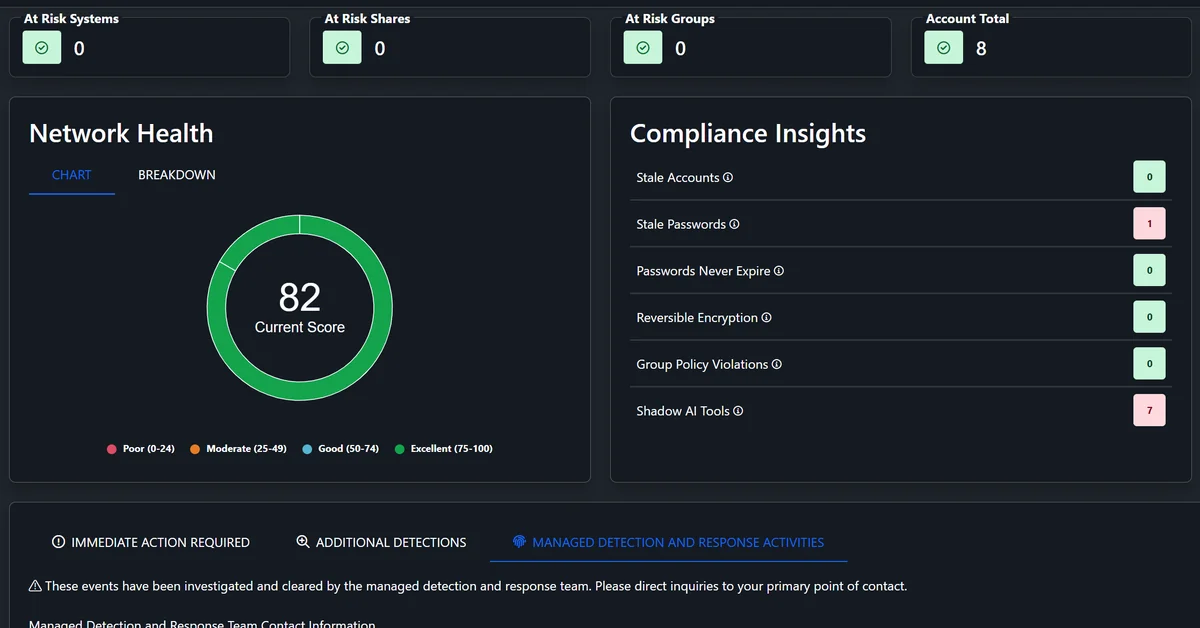
Insurance carriers have fundamentally transformed their assessment methodologies, moving from annual questionnaires to continuous validation protocols that scrutinize actual security telemetry rather than self-reported compliance. Organizations must now provide machine-readable evidence streams that demonstrate not just technology deployment, but operational effectiveness measured against industry benchmarks.
The shift toward continuous compliance monitoring means insurers now require integration with security orchestration platforms that generate standardized reporting metrics. These platforms must produce audit trails showing configuration changes, incident response times, and patch deployment velocity across all covered systems.
Insurance carriers evaluate three distinct evidence categories when determining coverage eligibility: technical telemetry that proves control effectiveness, operational metrics that demonstrate security team maturity, and governance documentation that validates executive oversight. Each category carries specific weight in premium calculations, with technical telemetry accounting for 45% of the risk score, operational metrics contributing 35%, and governance documentation comprising the remaining 20%.
The technical telemetry requirements have become increasingly granular. Insurers demand real-time visibility into authentication logs showing MFA adoption rates across user populations, with specific attention to privileged accounts and service accounts. Organizations must demonstrate that at least 95% of interactive logins utilize multifactor authentication, with administrative accounts requiring 100% coverage to qualify for standard premiums.
Vulnerability management evidence has evolved beyond simple scan reports. Carriers now require trend analysis showing mean time to remediation (MTTR) for critical vulnerabilities, with organizations achieving sub-72-hour MTTR receiving preferential rates. The evidence must include automated scanning schedules, exception tracking for unpatchable systems, and compensating control documentation for legacy infrastructure.
Operational metrics focus heavily on incident response capabilities. Insurers require documented tabletop exercise results conducted quarterly, with specific scenarios matching current threat intelligence. Response time measurements must show initial triage within 30 minutes of alert generation, containment actions initiated within 2 hours, and full incident documentation completed within 48 hours of resolution.
Security team certification status has become a quantifiable premium factor. Organizations demonstrating that 80% of security personnel hold industry certifications relevant to their roles receive premium discounts averaging 12%. The certifications must align with specific technology deployments—for instance, teams managing cloud infrastructure must show AWS or Azure security specializations.
Governance documentation requirements extend beyond traditional policy libraries. Insurers now mandate evidence of quarterly board-level security briefings, documented risk acceptance decisions for any unmitigated vulnerabilities, and third-party security assessment reports conducted within the past 12 months. Executive sponsorship must be demonstrated through budget allocation records showing year-over-year security investment increases.
The validation process itself has become standardized through the adoption of the Insurance Security Assessment Framework (ISAF), which establishes common data formats for security telemetry exchange between organizations and carriers. This framework specifies API endpoints for automated data collection, standardized scoring algorithms for risk calculation, and continuous monitoring requirements that update risk profiles in near real-time.
Organizations failing to provide adequate evidence face immediate consequences beyond premium increases. Carriers now impose coverage exclusions for specific attack vectors when corresponding controls cannot be validated. For example, ransomware coverage requires proof of automated backup testing conducted monthly, with restoration time objectives (RTOs) documented and verified through actual recovery exercises.