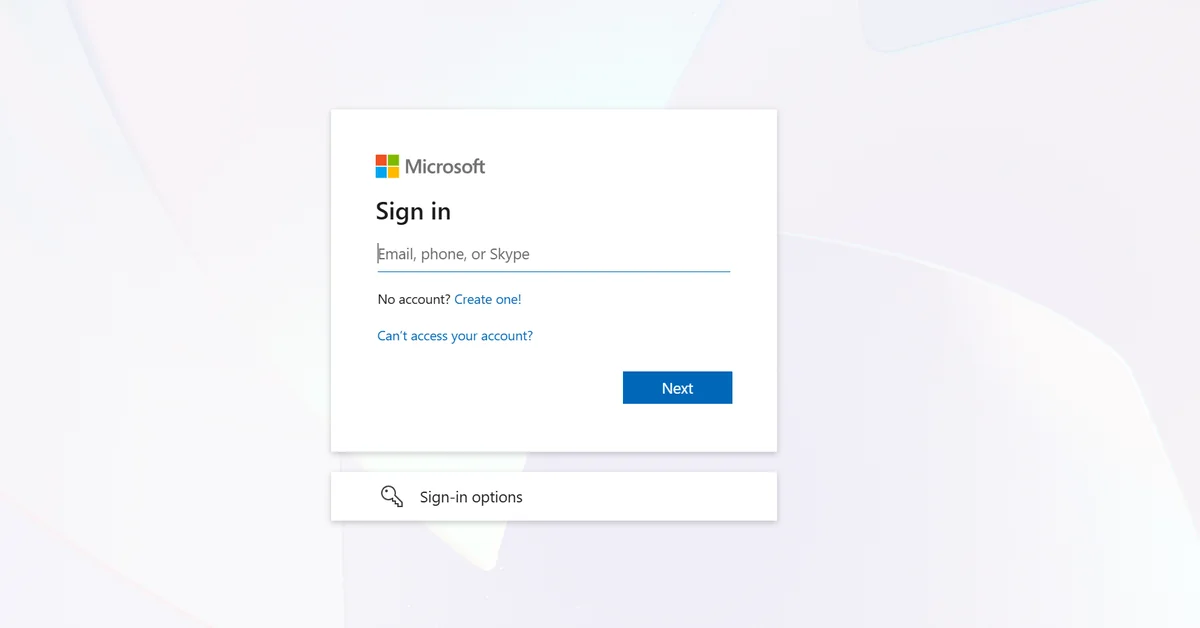
The Browser-in-the-Browser attack succeeds because it exploits a fundamental trust users have developed through years of interacting with browser authentication windows. When you click a sign-in button and see what appears to be a browser popup with Microsoft's OAuth URL in the address bar, your brain recognizes familiar visual patterns that signal legitimacy. The attackers understand this psychological response and have engineered their fake windows to perfectly mimic these trusted elements. (Source: Helpnetsecurity)
Key Insight: The Browser-in-the-Browser attack succeeds because it exploits a fundamental trust users have developed through years of interacting with browser authentication windows.
What makes this attack particularly insidious is how it manipulates the visual hierarchy of web browsers. The fake popup isn't actually a browser window at all - it's a cleverly designed HTML element embedded within the malicious webpage itself. Yet it includes all the expected components: a convincing address bar showing Microsoft OAuth URLs, standard window controls like minimize and close buttons, and the ability to drag the window around your screen. These interactive elements reinforce the illusion that you're dealing with a genuine browser security prompt.
The technical execution begins when victims land on the phishing page and click what appears to be a legitimate Microsoft sign-in button. At this moment, JavaScript code generates the fake browser window overlay, complete with operating system-specific styling. If you're using Windows with Chrome, the popup matches Chrome's interface on Windows. Mac users with Safari see a Safari-styled window on macOS. This environmental adaptation removes another potential red flag that might otherwise alert security-conscious users.
Behind the convincing interface, the credential harvesting mechanism operates through a sandboxed iframe that loads the actual phishing form. This architectural choice serves multiple purposes for the attackers. The iframe isolation makes the malicious code harder to analyze through browser developer tools, while also allowing the credential-stealing functionality to operate independently from the visual deception layer. When you enter your Microsoft 365 credentials into what appears to be a legitimate login form, the iframe captures and transmits this information directly to the attackers' servers.
The campaign employs sophisticated evasion techniques to maintain its effectiveness. The attackers override standard browser console functions, preventing security researchers from easily inspecting the page's behavior through developer tools. They break up text strings that security scanners might recognize as suspicious, fragmenting keywords like "Microsoft" or "login" across multiple JavaScript variables that only combine at runtime. Automated security scanners and bots receive different content entirely - they're redirected to legitimate Microsoft Office help pages, making the campaign harder to detect through automated threat hunting.
The connection to Kali365, a phishing-as-a-service platform that the FBI warned about last month, reveals the industrialized nature of these attacks. Kali365 enables attackers to steal Microsoft 365 access tokens and bypass multi-factor authentication through device code phishing techniques. While the Browser-in-the-Browser campaign focuses on direct credential theft through fake popups, platforms like Kali365 demonstrate how threat actors are developing multiple sophisticated approaches to compromise Microsoft 365 accounts. The availability of such tools means that even attackers with limited technical skills can deploy convincing phishing campaigns that bypass traditional security awareness training.
This combination of psychological manipulation, technical sophistication, and service-based attack tools represents a significant evolution in phishing tactics. Users believe they're entering credentials into Microsoft 365's secure authentication system, but they're actually submitting them directly to attackers who can then access corporate email, documents, and cloud resources with legitimate user permissions.
Why Microsoft 365 Users Are the Target—And What's at Stake
Microsoft 365 serves as the digital backbone for millions of organizations worldwide, hosting everything from email communications to sensitive documents and collaborative workspaces. When attackers compromise these accounts, they gain access to far more than just an email inbox - they obtain keys to an organization's entire cloud infrastructure.
The Browser-in-the-Browser campaign specifically targets Microsoft 365 because of the platform's ubiquitous presence across the Technology sector and beyond. Every compromised account represents a trusted identity within your organization's ecosystem, complete with legitimate permissions and established communication patterns that security tools recognize as normal.
Once attackers capture Microsoft 365 credentials through these convincing fake popups, they gain persistent access that extends well beyond initial compromise. Unlike traditional phishing that might expose a single system or application, Microsoft 365 credentials unlock multiple attack vectors simultaneously. Attackers can access SharePoint repositories containing intellectual property, Teams channels with strategic discussions, and OneDrive folders holding confidential data.
The business email compromise potential alone makes this campaign particularly damaging. With legitimate access to corporate email accounts, attackers can initiate fraudulent wire transfers, redirect invoice payments, or impersonate executives to authorize sensitive transactions. These attacks often go undetected for weeks because the communications originate from genuine corporate accounts with proper authentication.
What amplifies the risk is Microsoft 365's integration with other enterprise systems. Single sign-on configurations mean these stolen credentials often work across multiple platforms - from customer relationship management systems to financial applications. Attackers leverage this interconnectedness to move laterally through your environment, accessing systems that were never directly targeted.
The iframe-based credential harvesting mechanism mentioned by Unit 42 researchers indicates sophisticated data collection capabilities. Rather than simple password theft, these attacks can capture session tokens and authentication cookies that bypass traditional security measures. Even organizations with conditional access policies may find their defenses circumvented when attackers possess valid tokens from seemingly legitimate authentication sessions.
Document theft represents another critical concern. Microsoft 365 environments typically contain years of accumulated corporate knowledge - contracts, financial records, product designs, and customer databases. The platform's collaboration features, while enhancing productivity, also create extensive permission chains that attackers exploit to access shared resources across departments.
The campaign's ability to adapt its appearance based on operating system and browser combinations demonstrates attackers' understanding of their targets' environments. This attention to detail extends beyond visual mimicry - it reflects reconnaissance capabilities that help attackers blend their malicious activities with normal user behavior patterns.
Recovery from Microsoft 365 account compromise involves more than password resets. Organizations must audit all accessed resources, review sent communications, verify financial transactions, and potentially notify customers or partners about data exposure. The reputational damage from business email compromise or leaked confidential information often exceeds the immediate financial losses.
The reference to Kali365 as a phishing-as-a-service platform highlights how accessible these attack capabilities have become. When sophisticated phishing techniques become commoditized through service platforms, even less-skilled attackers can launch convincing campaigns against your users. This democratization of attack tools means organizations face threats from a broader range of adversaries than ever before.
This isn't just credential loss—it's an open door to your entire cloud infrastructure.
Detection and Response: Immediate Actions for Security Teams
Your security team needs to act within hours, not days. The Browser-in-the-Browser campaign bypasses traditional security controls by operating entirely within the browser's rendering engine, making standard endpoint detection ineffective.
Immediate Actions (Within 4 Hours):
Search your authentication logs for Microsoft 365 sign-in attempts that originate from sandboxed iframes. These appear as nested authentication requests where the referrer URL doesn't match Microsoft's legitimate OAuth endpoints. Your SIEM should flag any login attempt where the authentication popup's parent frame comes from domains outside Microsoft's infrastructure.
Deploy browser-level monitoring to detect when web pages attempt to override console functions - a technique Unit 42 identified in this campaign. When attackers disable developer tools through JavaScript manipulation, they leave traces in browser performance logs. Configure your endpoint agents to alert when any webpage executes console.log override commands or attempts to break debugging functionality.
Hunt for the presence of Kali365 phishing-as-a-service indicators across your environment. The FBI's recent warning about this platform reveals it enables device code phishing that bypasses MFA. Check Azure AD audit logs for unusual device registration patterns, particularly new device codes generated without corresponding user interaction.
Short-Term Response (24-48 Hours):
Analyze Microsoft 365 forwarding rules created in the past 30 days. Attackers who successfully harvest credentials through BitB attacks often establish email forwarding to maintain persistence even after password resets. Query Exchange Online PowerShell for any inbox rules containing external domains, paying special attention to rules that delete messages after forwarding.
Review authentication patterns for OS and browser mismatches. Since the phishing page adapts its appearance based on detected operating systems and browsers (Windows, macOS, Linux paired with Chrome, Firefox, Edge, or Safari), legitimate logins should show consistent OS/browser combinations for each user. Flag accounts where the authentication metadata suddenly changes platforms.
Block the domains Unit 42 published in their threat intelligence feed. While domain blocking provides temporary relief, prioritize implementing conditional access policies that evaluate authentication context beyond just credentials. Configure Azure AD to require additional verification when login attempts originate from unmanaged devices or show risk indicators.
Detection Engineering Requirements:
Create detection rules for pages that implement draggable fake browser windows. Monitor DOM manipulation events where JavaScript creates moveable div elements styled to mimic browser chrome. Your web application firewall should inspect POST requests to OAuth-mimicking endpoints that don't resolve to Microsoft's actual authentication servers.
Enable Azure AD Identity Protection's risk-based conditional access to automatically challenge suspicious sign-ins. When the system detects authentication from new locations or devices, it should trigger step-up authentication that BitB attacks cannot intercept since they only capture the initial credential entry.
Configure your email gateway to scan for messages containing links to pages with embedded iframe elements that load credential-harvesting functionality. The separation between the visible BitB interface and the actual phishing mechanism through sandboxed iframes creates a distinctive pattern your email security can detect before users ever see the fake popup.
Defensive Measures: Reducing Attack Surface Before Exploitation
Your defense against Browser-in-the-Browser attacks begins before attackers ever launch their fake popups. The campaign's reliance on embedded webpage elements means you can disrupt the attack chain at multiple points, starting with controls that take minutes to implement.
High-Impact Controls (Deploy Within 24 Hours)
Multi-factor authentication transforms stolen Microsoft 365 passwords into useless strings of text. Even when users enter credentials into the fake OAuth popup, attackers cannot complete the authentication flow without the second factor. Deploy MFA across all Microsoft 365 accounts, prioritizing administrative and finance users who handle sensitive data.
Configure Conditional Access policies to block sign-ins from sandboxed iframes - the exact technique this campaign uses to load its credential-harvesting functionality. Microsoft 365's Conditional Access engine can detect when authentication requests originate from embedded frames rather than direct browser navigation. Set policies to require additional verification or block these attempts entirely.
Enable comprehensive authentication audit logging across your Microsoft 365 tenant. The Browser-in-the-Browser attack generates distinctive authentication patterns when victims submit credentials through the fake popup. Your logs will capture these anomalous sign-in attempts, providing forensic evidence even if initial detection fails.
Medium-Effort Protections (Deploy Within One Week)
Browser isolation technology prevents the fake popup from ever rendering on user devices. By shifting web browsing to remote containers, isolation solutions strip out the JavaScript and HTML elements that create the convincing fake windows. High-risk users accessing Microsoft 365 through isolated browsers never see the spoofed OAuth URL or draggable popup window - they interact with a clean, rendered version of legitimate content only.
FIDO2 security keys provide cryptographic proof that authentication occurs on legitimate Microsoft domains. Unlike passwords that users can type into any form, FIDO2 keys only respond to genuine Microsoft OAuth endpoints. The Browser-in-the-Browser popup cannot trigger the cryptographic handshake, immediately exposing it as fraudulent when the key fails to activate.
Deploy application control policies that restrict which domains can spawn authentication windows. Microsoft 365 authentication should only originate from specific Microsoft domains. Your browser security policies can enforce this restriction, preventing the phishing page from creating its convincing fake popup regardless of how closely it mimics legitimate appearance.
User Awareness: Teaching Recognition of This Specific Attack
Traditional phishing training won't protect against Browser-in-the-Browser because the attack specifically defeats standard verification methods. Users need targeted education about this campaign's unique characteristics.
Teach users that legitimate Microsoft 365 authentication never occurs in draggable popup windows during active sessions. Microsoft's OAuth flow redirects the entire browser tab or opens a new tab - it doesn't spawn moveable windows that float over existing content. The ability to drag the authentication window around the screen, while making the fake popup seem more legitimate, actually reveals its fraudulent nature.
Demonstrate how the fake popup adapts its appearance to match Windows, macOS, or Linux interfaces. Show users side-by-side comparisons of legitimate Microsoft authentication screens versus the campaign's spoofed versions. Focus on subtle differences: legitimate OAuth URLs appear in the main browser address bar, not within the popup itself.
Create test scenarios where users encounter safe versions of Browser-in-the-Browser techniques. Let them experience dragging the fake window, seeing the spoofed URL, and recognizing how the popup's behavior differs from genuine authentication flows. This hands-on experience builds pattern recognition that theoretical training cannot achieve.
Browser-in-the-Browser Defense Timeline
Hunting for Compromise: Indicators and Investigation Priorities
Your investigation priorities shift dramatically when hunting for Browser-in-the-Browser compromises. The campaign's use of sandboxed iframes and spoofed OAuth URLs leaves distinct forensic traces that differ from traditional phishing attacks.
Start your hunt by examining Microsoft 365 audit logs for authentication events where the referrer field contains non-Microsoft domains. Legitimate OAuth flows always originate from login.microsoftonline.com or login.live.com. Any sign-in event with a referrer pointing to domains from Unit 42's published list indicates potential credential compromise.
Focus your audit log analysis on these specific event types: UserLoggedIn events occurring outside normal business hours for the affected user, MailItemsAccessed events showing bulk email downloads shortly after authentication, and Add-MailboxPermission cmdlet executions that grant access to additional mailboxes. These patterns reveal attackers establishing persistence and harvesting data after initial compromise.
The Kali365 phishing-as-a-service platform mentioned by the FBI creates distinctive artifacts in your environment. Search for device code authentication attempts where the user agent string doesn't match the user's typical browser profile. Kali365 generates device codes that bypass MFA, but these codes leave traces in Azure AD sign-in logs as "DeviceCodeFlow" authentication methods paired with unusual IP addresses.
Browser telemetry reveals the attack's client-side behavior. The campaign's technique of overriding console functions creates JavaScript errors in browser developer tools. Your endpoint detection should capture these console manipulation attempts through browser extension APIs or enterprise browser management tools. Look for pages that execute commands like console.log = function(){} or similar function overrides.
Prioritize investigation based on user risk profiles. Technology sector employees represent primary targets according to Unit 42's findings. Users with Global Administrator, Exchange Administrator, or SharePoint Administrator roles require immediate attention - their compromised accounts enable attackers to create backdoor accounts and modify security settings. Finance and HR personnel handling sensitive data warrant similar priority.
Post-compromise activity follows predictable patterns. Search for new inbox rules created within 48 hours of suspicious authentication events, particularly rules that forward emails to external addresses or delete messages containing specific keywords. The campaign often establishes these rules to maintain access after password resets.
Query your SIEM for correlation between popup interaction and subsequent authentication anomalies. Users who report seeing Microsoft sign-in popups that behaved strangely - like being draggable or having unusual minimize buttons - should trigger immediate password resets and session revocations. Cross-reference these reports with authentication logs showing successful logins from new geographic locations within the same timeframe.
The sandboxed iframe technique leaves network traces. Your proxy logs should show HTTPS connections to the malicious domains where the parent frame loads from one domain while authentication-related traffic appears to target Microsoft endpoints. This split-origin pattern distinguishes BitB attacks from legitimate authentication flows where all resources load from Microsoft's infrastructure.
Document which operating system and browser combinations appear in your compromise indicators. The campaign's adaptive rendering means attackers customize their fake popups for Windows, macOS, Linux, Chrome, Firefox, Edge, and Safari. Understanding which combinations succeeded helps refine your detection rules and user training priorities.
Attribution and Threat Actor Context
The Browser-in-the-Browser campaign represents a financially motivated operation designed for credential harvesting at scale. Unlike targeted attacks against specific organizations, this campaign casts a wide net across the Microsoft 365 ecosystem, suggesting attackers prioritize volume over precision.
Palo Alto Networks Unit 42's attribution reveals a sophisticated operation that leverages automation and scalability. The campaign's infrastructure includes multiple domains configured to harvest credentials from any organization using Microsoft 365, regardless of industry or size. This opportunistic approach aligns with modern cybercrime economics where stolen credentials serve as commodities in underground markets.
The financial motivation becomes clear when examining the attack's ultimate objectives. Compromised Microsoft 365 accounts command premium prices on criminal forums, with administrative accounts fetching thousands of dollars each. These credentials enable multiple revenue streams for attackers: direct business email compromise schemes, data theft for competitive intelligence, and access brokering to ransomware operators.
What distinguishes this campaign from nation-state operations is its focus on rapid monetization rather than persistent access. The attackers don't appear interested in maintaining long-term presence within victim networks. Instead, they harvest credentials, validate access, and either exploit the accounts directly or sell them to specialized criminal groups who conduct the actual fraud.
The campaign's technical sophistication suggests involvement of experienced cybercriminal groups rather than amateur operators. The ability to dynamically adapt popup appearance based on operating system and browser requires significant development resources. The implementation of anti-analysis techniques, including console function overrides and bot detection mechanisms, indicates attackers anticipate scrutiny from security researchers and automated scanning systems.
Key Insight: The ability to dynamically adapt popup appearance based on operating system and browser requires significant development resources.
Business email compromise remains the most likely end goal for harvested credentials. Once attackers gain access to legitimate Microsoft 365 accounts, they can intercept invoice communications, redirect payments, and impersonate executives to authorize fraudulent transactions. The FBI's recent warning about Kali365, a phishing-as-a-service platform targeting Microsoft 365 users, demonstrates how credential theft operations have become industrialized, with specialized tools enabling even low-skilled criminals to launch sophisticated attacks.
The Technology sector faces particular risk not because of targeted selection, but due to its heavy reliance on cloud-based collaboration. Technology companies typically grant broader permissions to standard user accounts, enabling access to source code repositories, customer databases, and internal documentation. A single compromised account in a technology firm provides significantly more value than equivalent access in traditional industries.
The campaign's opportunistic nature means every Microsoft 365 deployment represents a potential target. Attackers don't need to research specific organizations or craft targeted lures. The universal familiarity with Microsoft's authentication interface ensures victims across all industries will recognize and trust the fake OAuth popup. This broad applicability explains why Unit 42 discovered multiple active domains supporting the campaign - attackers can rotate infrastructure to avoid blocklists while maintaining continuous operations.
The emergence of Browser-in-the-Browser as a mainstream attack technique signals a shift in phishing economics. Traditional phishing required constant updates to evade detection, limiting scalability. This new approach operates entirely within legitimate browser functionality, reducing operational overhead while increasing success rates against security-aware users who normally scrutinize authentication requests.