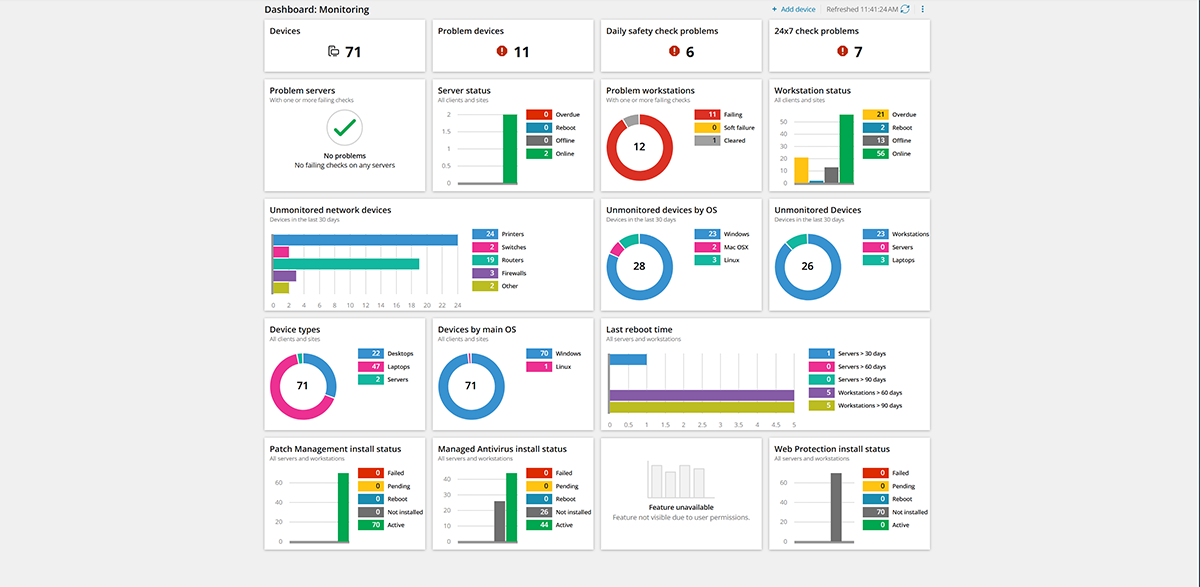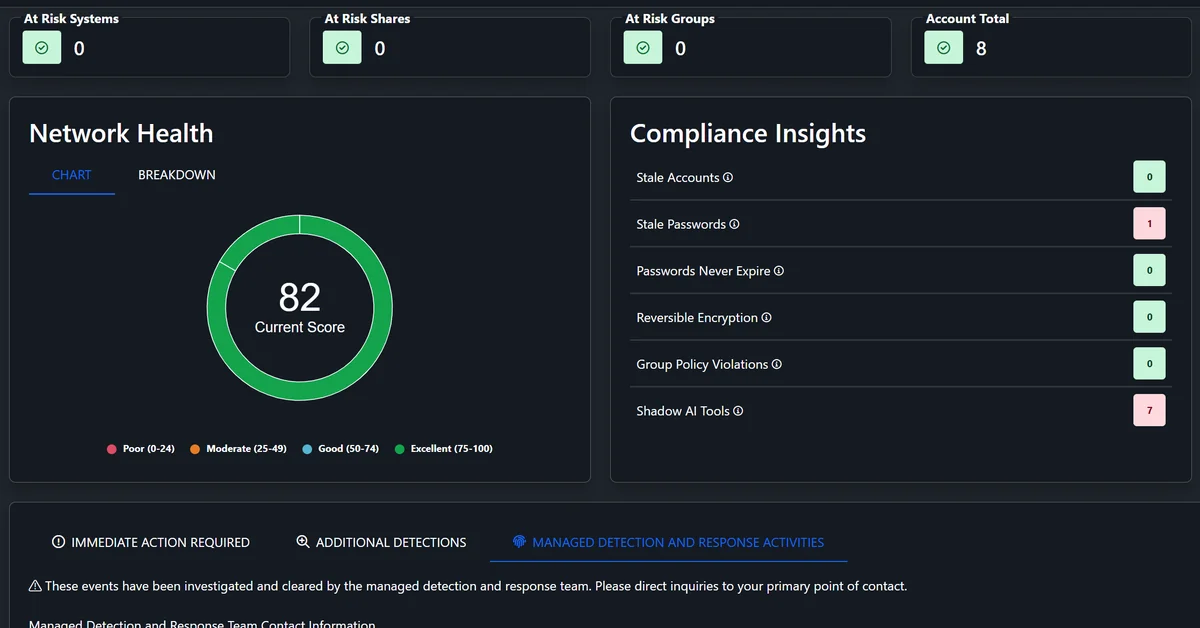
Organizations adopting AI systems face an unprecedented security challenge: traditional cybersecurity tools cannot detect attacks targeting machine learning models. The disconnect between conventional vulnerability management and AI-specific threats creates operational blind spots that adversaries actively exploit. (Source: Paloaltonetworks)
The financial implications are stark. When adversarial attacks corrupt AI decision-making systems, the damage compounds over time—unlike traditional breaches that security teams can immediately contain. A poisoned fraud detection model, for instance, continues approving fraudulent transactions until the corruption is discovered, potentially weeks or months after initial compromise.
Key Insight: When adversarial attacks corrupt AI decision-making systems, the damage compounds over time—unlike traditional breaches that security teams can immediately contain.
The speed differential between AI-enhanced attacks and manual security operations creates an asymmetric disadvantage. Automated adversarial techniques can probe thousands of model variations per second, while security teams manually reviewing model behavior struggle to keep pace. This velocity gap means attackers identify and exploit AI vulnerabilities faster than defenders can patch them.
Consider the operational reality: security teams managing AI deployments lack standardized frameworks for documenting and sharing AI-specific vulnerabilities. Without a common language for describing model poisoning or inference attacks, organizations cannot effectively communicate threats or coordinate responses. This fragmentation leaves each organization to discover and defend against the same attacks independently.
The competitive landscape amplifies these risks. Organizations that fail to secure their AI implementations face dual exposure: direct losses from compromised models and competitive disadvantage as adversaries steal proprietary training data or model architectures. The absence of AI-specific security measures becomes a business liability as competitors with robust AI defenses operate with greater confidence and agility.
Integration challenges compound the problem. Security teams accustomed to patching software vulnerabilities find themselves unprepared for threats that target training datasets or model weights. Traditional security tools designed for deterministic systems cannot assess probabilistic AI behaviors, leaving organizations without visibility into their AI attack surface.
The cost equation favors early investment in AI security infrastructure. Organizations that establish AI vulnerability management processes before experiencing incidents avoid the exponentially higher costs of post-breach remediation. This includes not just technical recovery but regulatory penalties, as emerging AI governance frameworks increasingly mandate security controls for AI systems in critical sectors.
The establishment of an AI Information Sharing and Analysis Center (AI-ISAC) represents a critical step toward addressing these challenges. By creating standardized mechanisms for documenting and sharing AI vulnerabilities, the security community can leverage existing infrastructure while adapting to new threat models.
The core challenge remains clear: organizations deploying AI systems operate without established frameworks for identifying, documenting, and mitigating AI-specific vulnerabilities. This gap between traditional cybersecurity practices and AI security requirements creates exploitable weaknesses that adversaries increasingly target. The integration of AI vulnerability standards into trusted frameworks like the CVE Program offers a path forward, enabling organizations to apply proven vulnerability management processes to emerging AI threats.
The Attack Surface AI Must Defend: Where Modern Threats Exploit Blind Spots
The convergence of artificial intelligence and traditional IT infrastructure creates attack surfaces that conventional security tools fundamentally cannot monitor. Unlike traditional vulnerabilities that exist in code or configurations, AI systems introduce probabilistic decision-making layers where adversarial manipulations remain invisible to signature-based detection.
Consider how attackers exploit training data pipelines. When threat actors inject poisoned samples into datasets used for security model training, the corruption propagates through every subsequent decision the model makes. A compromised intrusion detection system trained on manipulated network traffic patterns will systematically ignore specific attack signatures—not because of a software bug, but because its learned behavior has been fundamentally altered.
Key Insight: Consider how attackers exploit training data pipelines.
The inference phase presents equally critical exposure points. Model inversion attacks extract sensitive information by analyzing AI system outputs, reconstructing training data that often contains proprietary algorithms or confidential business logic. Security teams monitoring traditional data exfiltration channels miss these attacks entirely because the data leaves through legitimate API responses rather than unauthorized network connections.
Membership inference attacks reveal whether specific data points existed in training sets, exposing customer records, employee information, or intellectual property without triggering any conventional data loss prevention systems. The attack operates through statistical analysis of model confidence scores—activity that appears identical to normal model queries.
Supply chain vulnerabilities in AI systems extend beyond traditional software dependencies. Pre-trained models downloaded from public repositories carry embedded backdoors that activate only under specific input conditions. Organizations deploying these models for fraud detection, content moderation, or threat analysis inherit compromised decision-making capabilities that pass all standard security validations.
The temporal dimension of AI attacks defies traditional incident response timelines. While conventional malware triggers immediate indicators—unusual network traffic, modified files, or suspicious processes—adversarial AI attacks accumulate damage gradually. A poisoned recommendation engine slowly shifts customer behavior patterns. A compromised risk assessment model progressively approves higher-risk transactions. Detection requires analyzing model drift over weeks or months, far exceeding the scope of real-time security monitoring.
Evasion attacks demonstrate the inadequacy of rule-based defenses against AI-targeted threats. Attackers craft inputs that appear benign to security filters but trigger misclassification in AI models. A malicious document modified at the pixel level bypasses content filters while causing document classification systems to route it to high-privilege users. Network packets altered in ways imperceptible to protocol analyzers cause AI-based intrusion detection to categorize attack traffic as legitimate business communications.
The distributed nature of modern AI deployments multiplies exposure points. Edge devices running lightweight models for real-time decision-making lack the computational resources for comprehensive security monitoring. Cloud-based training environments share infrastructure across multiple tenants, creating lateral movement opportunities through shared model repositories and dataset storage. Federated learning systems aggregate updates from thousands of endpoints, any of which could inject poisoned gradients that corrupt the global model.
These attack vectors bypass traditional security controls because they target the learning process itself rather than exploiting implementation flaws. The security community's existing vulnerability management infrastructure assumes deterministic behavior that AI systems inherently lack.
AI System Attack Surface Evolution
Building the AI-Ready Security Stack: Technical Integration Priorities
The path to integrating AI capabilities into existing security infrastructure requires careful orchestration of technologies that complement rather than replace current investments. Organizations must navigate the complexity of merging probabilistic AI systems with deterministic security tools while maintaining operational continuity.
Immediate Integration Priorities: Enhancing Existing Platforms
Security teams can achieve rapid value by augmenting current SIEM and SOAR platforms with AI-powered analytics layers. These enhancements require minimal architectural changes while delivering measurable improvements in threat detection accuracy.
The first integration point involves enriching security information and event management systems with machine learning models that identify behavioral anomalies across user activities and network traffic. Modern SIEM platforms already collect the telemetry needed—authentication logs, network flows, and endpoint events. Adding AI processing layers transforms this raw data into predictive indicators that surface threats before traditional rule-based detection triggers.
Organizations operating Splunk environments can deploy machine learning toolkits that analyze historical incident patterns to predict future attack vectors. Microsoft Sentinel users gain similar capabilities through built-in anomaly detection that learns baseline behaviors specific to each environment. Elastic Security provides native machine learning jobs that automatically identify unusual network connections, authentication patterns, and process executions without requiring data scientists to build custom models.
These initial deployments typically require 2-3 weeks of baseline learning before generating actionable alerts. Resource requirements remain modest—existing SIEM infrastructure handles the computational load, requiring only configuration adjustments and alert tuning.
Medium-Term Capabilities: Automated Intelligence and Response
The next phase introduces automation that reduces analyst workload while accelerating threat response. This stage focuses on connecting AI-enhanced detection with orchestration platforms that execute predefined response playbooks.
Threat intelligence automation represents a critical capability gap that AI effectively addresses. Instead of analysts manually correlating indicators across dozens of feeds, machine learning models automatically identify patterns linking disparate threat data to active campaigns. These systems ingest structured threat feeds, unstructured reports, and internal telemetry to generate contextualized intelligence specific to each organization's attack surface.
Incident response orchestration benefits from AI's ability to recommend response actions based on historical effectiveness. When similar incidents occurred previously, which containment strategies worked? What investigation steps yielded critical evidence? AI models analyze past incident tickets, forensic reports, and remediation outcomes to suggest optimal response workflows.
Integration complexity increases at this stage. Organizations must establish data pipelines between threat intelligence platforms, ticketing systems, and orchestration tools. API connections enable automated evidence collection, while machine learning models require access to historical incident data for training. Implementation typically spans 2-3 months, including model training, playbook development, and validation testing.
Long-Term Vision: Predictive Defense and Autonomous Response
The final evolution introduces capabilities that fundamentally transform security operations from reactive to predictive. These systems anticipate attack paths before adversaries execute them and autonomously implement defensive measures.
Predictive threat modeling leverages AI to simulate thousands of potential attack scenarios based on current vulnerabilities, exposed assets, and threat actor behaviors. Unlike traditional risk assessments that rely on static scoring, these models continuously update predictions as the threat landscape evolves. They identify attack chains that human analysts might overlook—complex multi-stage intrusions that exploit seemingly unrelated vulnerabilities.
Autonomous response systems represent the culmination of AI security integration. These platforms make real-time containment decisions without human intervention, crucial when attacks unfold faster than analysts can respond. The systems learn from each engagement, refining response strategies based on effectiveness metrics and minimizing business disruption.
Detection and Response: What Your AI System Should Alert On (And Why)
Modern AI systems must detect patterns that signal compromise attempts specifically targeting machine learning models and their underlying infrastructure. The distinction between traditional security monitoring and AI-specific detection lies in recognizing attacks that manipulate probabilistic decision-making rather than exploiting deterministic code flaws.
Model behavior deviation represents the primary indicator of adversarial manipulation. When AI systems suddenly produce outputs that diverge from established baselines—such as classification models consistently misidentifying specific input patterns or recommendation engines promoting unusual content clusters—these anomalies often indicate poisoning attacks have corrupted the model's learned parameters. Security teams need monitoring that tracks prediction confidence scores, output distribution shifts, and decision boundary changes over time.
Detection systems should flag training pipeline anomalies that precede model corruption. Unusual data ingestion patterns, including sudden spikes in training sample submissions from new sources or modifications to existing datasets outside normal maintenance windows, warrant immediate investigation. These indicators often appear days or weeks before poisoned models begin producing corrupted outputs.
Inference attack patterns manifest through distinctive query behaviors. When external actors attempt model inversion or membership inference attacks, they generate characteristic request sequences: repeated queries with minimal variations, systematic exploration of decision boundaries, or targeted probing of specific data categories. Alert thresholds should trigger when query patterns exceed normal variance by more than two standard deviations within rolling time windows.
The AI Action Plan's emphasis on establishing an AI-ISAC underscores the need for specialized detection capabilities that existing security infrastructure cannot provide. Traditional SIEM platforms lack context for distinguishing legitimate model retraining from adversarial dataset manipulation.
Priority response matrix for AI threats:
- Critical (immediate human intervention): Detection of backdoor triggers in production models, unauthorized model replacement, or extraction attempts targeting proprietary training data. These events require instant model rollback and forensic analysis.
- High (automated containment with escalation): Abnormal prediction patterns affecting critical business decisions, suspicious training data modifications, or coordinated inference attacks. Systems should automatically quarantine affected models while alerting security teams.
- Medium (automated remediation): Minor confidence score fluctuations, isolated anomalous predictions, or single-source data quality issues. Automated systems can revert to previous model versions or filter suspicious inputs without human intervention.
Establishing baselines requires collecting model performance metrics across multiple dimensions: accuracy rates per data category, prediction confidence distributions, and processing latency patterns. These baselines must account for legitimate model drift as systems encounter new data distributions during normal operations.
False positive reduction strategies center on contextual correlation. Rather than alerting on individual anomalies, detection systems should correlate multiple indicators: unusual model outputs combined with suspicious query patterns, or training data modifications coinciding with prediction accuracy drops. This multi-factor approach reduces alert fatigue while maintaining sensitivity to genuine threats.
Automated response actions must balance security with operational continuity. When detecting potential model poisoning, systems should maintain service availability by falling back to previous model versions rather than halting operations entirely. For inference attacks, rate limiting and query pattern analysis can block malicious actors while preserving legitimate user access.
Operationalizing AI Without Creating New Risks: Governance and Validation
The integration of AI into security operations introduces a fundamental paradox: the same systems designed to protect against threats can themselves become vectors for sophisticated attacks. Organizations deploying machine learning models for threat detection must establish rigorous governance frameworks that prevent these defensive tools from being weaponized against their own infrastructure.
Model validation requires continuous adversarial testing that goes beyond traditional penetration testing methodologies. Security teams must simulate evasion attacks where adversaries craft inputs specifically designed to bypass AI detection—similar to how malware authors test their code against antivirus engines before deployment. These validation exercises should include gradient-based attacks that exploit the mathematical foundations of neural networks, forcing models to misclassify malicious inputs as benign.
The explainability challenge presents operational complexity that traditional security tools never faced. When an AI system flags suspicious activity, security analysts need more than confidence scores—they require transparent reasoning chains that justify each alert. This transparency becomes critical during incident response when teams must distinguish between genuine threats and adversarial manipulations designed to trigger false positives.
Consider how inference attacks exploit model outputs to extract sensitive information about training data. An AI system trained on proprietary network traffic patterns inadvertently reveals organizational infrastructure details through its classification decisions. Attackers can systematically probe these models, using membership inference techniques to determine whether specific data points were included in training sets, potentially exposing confidential security configurations.
Bias detection in training data represents another governance imperative. Models trained on historical security incidents inherit the blind spots and assumptions embedded in that data. If past attacks predominantly originated from specific geographic regions or used particular techniques, the AI system develops detection gaps that sophisticated adversaries will exploit.
Audit logging for AI decisions requires capturing not just outcomes but the entire decision pathway. Traditional security logs record events and actions; AI audit trails must document input features, model versions, confidence thresholds, and any human overrides. This comprehensive logging enables forensic analysis when models produce unexpected results or fail to detect known threats.
Human-in-the-loop decision points become essential safeguards against automated failures. Critical actions—such as blocking legitimate traffic, quarantining systems, or escalating incidents—should require human validation when AI confidence falls below established thresholds. This prevents cascading failures where compromised models trigger destructive automated responses.
Governance structures must clearly delineate ownership for model updates and retraining cycles. The responsibility matrix should specify who authorizes new training data sources, validates model performance metrics, and approves production deployments. Model drift monitoring becomes a shared responsibility between data science teams who understand the algorithms and security operations who understand the threat landscape.
Red team exercises must evolve to include poisoning attacks where adversaries corrupt training pipelines rather than targeting production systems. These simulations should test whether organizations can detect when threat actors inject malicious samples into datasets, causing models to learn incorrect patterns that create deliberate vulnerabilities.
Incident response procedures require specific protocols for AI system compromise. Unlike traditional breaches where teams can roll back to clean backups, poisoned models may have been learning corrupted patterns for weeks before detection. Recovery involves not just restoring systems but retraining models with verified clean data while maintaining operational continuity.
Measuring Success: KPIs That Matter for AI-Integrated Defense
Establishing meaningful metrics for AI-enhanced security requires organizations to move beyond traditional security KPIs that fail to capture the unique value propositions and operational dynamics of machine learning systems. The challenge lies in isolating AI's specific contribution from broader security improvements while accounting for the probabilistic nature of AI decision-making.
Baseline Establishment: The Foundation for Measurement
Before deploying AI capabilities, organizations must document current performance across detection accuracy, analyst workload, and incident response timelines. This baseline captures the percentage of threats missed by existing tools, average investigation time per alert, and the ratio of true positives to false positives generated daily. Without these reference points, attributing improvements to AI integration becomes speculation rather than measurement.
Critical baseline metrics include the current detection rate for adversarial attacks targeting machine learning models—a capability gap the White House AI Action Plan specifically addresses. Most organizations discover they have zero visibility into model poisoning or inference attacks before implementing AI-specific monitoring.
Leading Indicators: Early Warning Signals
Model drift metrics serve as the primary leading indicator for AI security effectiveness. When classification accuracy degrades or confidence scores fluctuate beyond established thresholds, these patterns often precede security incidents by days or weeks. Organizations should track the percentage of model predictions falling within confidence bands, monitoring for sudden shifts that indicate potential adversarial manipulation.
Coverage expansion represents another critical leading metric. As AI systems learn from new threat patterns, they should progressively identify attack variants that signature-based tools miss. Measuring the growth in detected threat families—particularly those exploiting probabilistic AI behaviors—demonstrates expanding defensive capabilities.
Detection rule adaptation frequency indicates whether AI systems are genuinely learning from the threat landscape. Static rule sets suggest the AI isn't evolving, while excessive changes might indicate instability or adversarial influence.
Lagging Indicators: Proven Impact
Mean time to detect (MTTD) reduction specifically for AI-targeted attacks provides the clearest evidence of defensive improvement. Organizations implementing AI-enhanced monitoring typically see MTTD drop from weeks to hours for poisoning attacks, though this requires careful measurement design to exclude other variables.
False positive reduction rates directly translate to analyst productivity gains. Each percentage point decrease in false positives represents hours of investigation time redirected toward genuine threats. The AI Action Plan's emphasis on information sharing will enable industry benchmarking of these improvements.
Breach cost avoidance calculations must account for the compounding damage from corrupted AI models. Unlike traditional breaches with immediate impact, poisoned models generate escalating losses over time—making prevention value calculations more complex but ultimately more substantial.
Attribution Methodology: Isolating AI's Contribution
Organizations often struggle to separate AI's impact from concurrent security improvements. Controlled comparison groups provide the solution: maintaining parallel detection pipelines where only one incorporates AI enhancement allows direct performance comparison. This A/B testing approach reveals AI's incremental value while controlling for other variables.
Temporal analysis offers another attribution method. By comparing detection rates for identical threat types before and after AI deployment, organizations can quantify improvement while accounting for seasonal variations and threat evolution.
Implementation Timeline: Phased Measurement Framework
The 90-day milestone focuses on operational metrics: model uptime, processing latency, and integration stability. Success criteria include maintaining sub-second inference times while processing production traffic volumes without degradation.
Six-month assessments shift toward effectiveness metrics: detection accuracy improvements, false positive trends, and coverage expansion across attack surfaces. Organizations should expect measurable improvements in identifying adversarial attacks that traditional tools miss.
Twelve-month evaluations emphasize strategic impact: total cost of ownership compared to prevented losses, analyst retention improvements from reduced alert fatigue, and compliance benefits from enhanced threat documentation. These longer-term metrics justify continued AI investment and guide capability expansion.