The travel booking ecosystem represents one of the most lucrative targets for AI-enhanced attacks, combining high-value financial transactions with rich identity data across millions of daily interactions. Devon Bryan, SVP and Global CSO at Booking Holdings, describes how AI has fundamentally transformed the threat landscape through "speed, scale, accessibility, and sophistication" - enabling attacks that once required specialized expertise to be executed convincingly at unprecedented volume. (Source: Helpnetsecurity)
Traditional security controls built for human-speed attacks are proving inadequate against AI-powered adversaries. Rate limiting designed to stop manual credential stuffing attempts becomes ineffective when attackers use AI to distribute login attempts across thousands of IP addresses, mimicking legitimate user behavior patterns. Basic bot detection that relies on behavioral analysis struggles against AI systems trained on millions of legitimate booking interactions.
The interconnected nature of travel platforms amplifies these risks exponentially. Bryan emphasizes that "the attack surface is no longer limited to what you directly own" but extends through "vendors, APIs, cloud environments, partner ecosystems, and increasingly AI-enabled workflows." When a single booking touches airline systems, hotel chains, payment processors, and loyalty programs, each integration point becomes a potential breach vector that AI can probe simultaneously.
Prompt injection attacks represent an entirely new category of risk that didn't exist before widespread AI adoption. Attackers craft malicious inputs designed to manipulate AI-powered customer service chatbots, booking assistants, and recommendation engines. These attacks can trick systems into revealing sensitive customer data, bypassing authentication requirements, or processing fraudulent transactions that appear legitimate to traditional fraud detection systems.
The sophistication of AI-generated phishing and social engineering has evolved beyond simple template variations. Bryan notes that these attacks are now "more personalized, multilingual, and operationally scalable" - capable of crafting convincing impersonations of travel agents, airline representatives, or hotel staff using context gleaned from public social media profiles and previous booking histories. A single AI system can simultaneously conduct thousands of unique, contextually relevant social engineering attempts across different languages and cultural contexts.
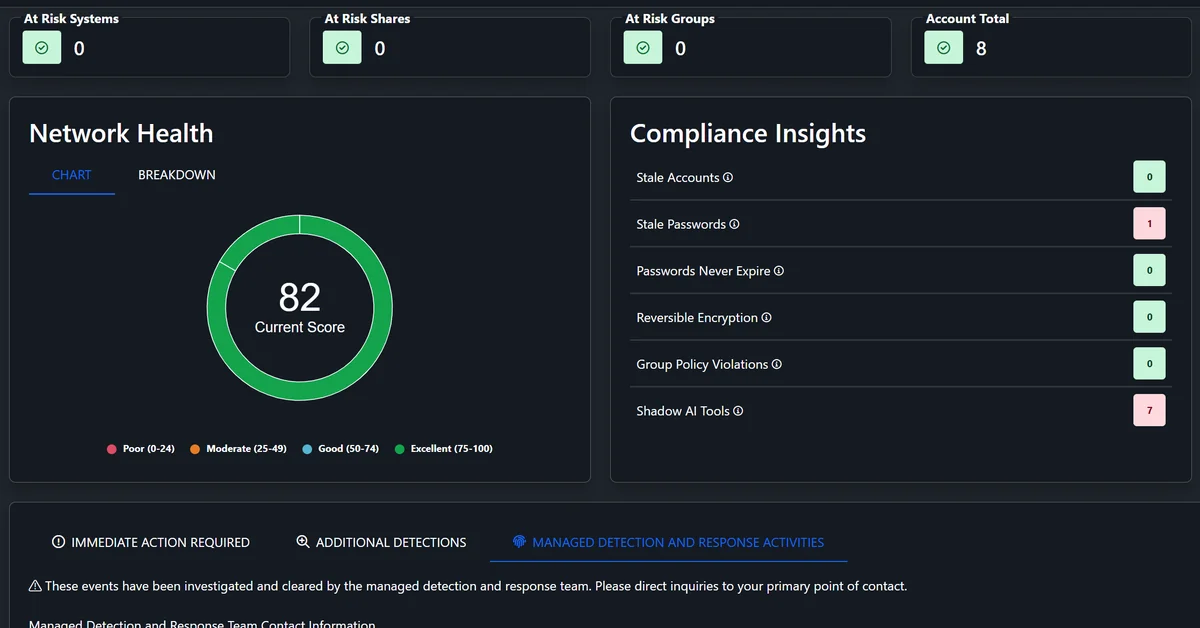
Shadow AI adoption within enterprises creates additional blind spots that attackers exploit. Employees using unauthorized AI tools for productivity - translating customer communications, summarizing booking data, or generating marketing content - inadvertently expose sensitive information to external AI systems. These tools often lack enterprise security controls, creating data leakage paths that bypass traditional data loss prevention systems.
The economics of AI-powered attacks have shifted dramatically in attackers' favor. What previously required teams of skilled operators can now be automated by a single attacker with access to commercially available AI tools. This democratization of sophisticated attack capabilities means travel platforms face threats from a vastly expanded pool of adversaries, ranging from opportunistic criminals to state-sponsored groups targeting geopolitical assets.
Bryan's observation that "AI is simultaneously a force multiplier for both attackers and defenders" underscores a critical reality: the same AI capabilities that enable more sophisticated attacks also power defensive innovations. However, the asymmetry favors attackers who need only one successful breach, while defenders must protect every potential entry point across their interconnected ecosystem.
Key Insight: However, the asymmetry favors attackers who need only one successful breach, while defenders must protect every potential entry point across their interconnected ecosystem.
AI-Enhanced Attack Chain in Travel Booking Ecosystem
Attack Chains: From AI Reconnaissance to Fraudulent Reservations
The convergence of AI capabilities with travel platform vulnerabilities creates attack sequences that unfold at machine speed, far exceeding traditional fraud detection capabilities. Bryan's observation about AI enabling attacks "more convincingly and at far greater volume" manifests through sophisticated multi-stage campaigns that exploit the unique characteristics of travel booking systems.
Modern attack chains begin with AI-powered reconnaissance that goes beyond simple web scraping. Machine learning algorithms analyze booking patterns across multiple travel platforms simultaneously, identifying pricing anomalies, inventory fluctuations, and customer behavior trends that signal vulnerability windows. These models process thousands of data points - seasonal demand curves, cancellation patterns, loyalty program redemption rates - to predict when systems are most susceptible to manipulation.
The sophistication emerges in how AI transforms raw data into actionable intelligence. Rather than randomly attempting fraudulent bookings, attackers deploy predictive models that identify high-value targets: premium cabin inventory during peak travel periods, transferable loyalty points approaching expiration, or corporate travel accounts with elevated booking privileges. Bryan's emphasis on "identity integrity" reflects how these models specifically target accounts with the richest data profiles and weakest authentication patterns.
AI fundamentally changes the economics of credential harvesting for travel platforms. Where traditional phishing campaigns relied on generic templates, AI now generates highly contextual attacks using industry-specific terminology, recent booking confirmations, and loyalty program communications. These campaigns dynamically adjust language based on the target's travel history, preferred airlines, and booking patterns scraped from compromised databases or purchased on dark web marketplaces.
The acceleration Bryan describes as "speed, scale, accessibility, and sophistication" becomes most apparent during the exploitation phase. AI orchestrates simultaneous attacks across multiple vectors: automated booking manipulation to corner inventory and drive artificial scarcity, loyalty point transfers executed milliseconds before detection algorithms trigger, and payment fraud that exploits the time gap between booking confirmation and payment settlement. Traditional velocity checks designed for human-speed attacks fail against AI systems that distribute activity across thousands of IP addresses, user agents, and session fingerprints.
What makes these attacks particularly challenging for travel platforms is their exploitation of legitimate business processes. AI doesn't just break into systems - it learns to operate within them. Machine learning models study cancellation policies to identify arbitrage opportunities, analyze fare rules to exploit pricing errors at scale, and map partner airline agreements to launder stolen loyalty points through complex redemption chains. Bryan's point about attackers targeting "trust relationships and operational dependencies" captures how AI weaponizes the very interconnectedness that makes modern travel booking possible.
The compounding effect occurs when multiple AI-driven attack components operate in concert. Reconnaissance feeds targeting algorithms, which optimize credential attacks, which enable booking manipulation, which generates fraudulent transactions - all executing faster than human analysts can correlate the signals. Traditional detection systems that rely on rule-based logic or statistical anomalies struggle against adversaries that continuously adapt their tactics based on defensive responses, creating what Bryan describes as an environment becoming "faster, more interconnected, and more uncertain every year."
AI-Powered Travel Platform Attack Chain
Detection Blind Spots in Travel Platforms
The interconnected nature of travel platforms creates fundamental visibility gaps that traditional security monitoring cannot address. Bryan's emphasis on how AI enables attacks to operate "more convincingly and at far greater volume" exposes a critical weakness: detection systems built for predictable, pattern-based threats.
Modern travel platforms rely on threshold-based monitoring that assumes malicious activity will exceed normal parameters. But AI-driven attacks deliberately operate within these boundaries, mimicking legitimate user behavior while executing fraudulent transactions at scale.
Payment processing blind spots represent the most immediate vulnerability. Travel booking systems process thousands of legitimate high-frequency transactions daily - corporate travel management companies booking multiple flights, tour operators reserving hotel blocks, and travel agents managing group bookings. AI-automated fraud blends seamlessly into this legitimate traffic volume.
When an AI system books 50 flights across different routes using varied payment methods and realistic passenger profiles, it appears identical to a corporate travel desk handling quarterly planning. The payment gateway sees valid cards, proper authorization codes, and transaction amounts within normal ranges. By the time chargebacks reveal the fraud, the damage cascades across inventory systems, partner allocations, and revenue forecasting.
Loyalty program APIs operate with even less behavioral monitoring. These systems were designed for simple point accrual and redemption, not sophisticated pattern analysis. Bryan's observation about "machine-to-machine trust" highlights how loyalty APIs accept bulk transfers, account merges, and point conversions without analyzing the behavioral context.
AI systems exploit this by executing micro-transactions across thousands of accounts - transferring points just below alert thresholds, timing redemptions to match seasonal patterns, and distributing activity across geographic regions to avoid concentration flags. The API sees valid authentication tokens and properly formatted requests. It cannot detect that the orchestration pattern itself signals automated exploitation.
Third-party integration endpoints compound these visibility gaps. Travel platforms connect to hundreds of external systems - airline GDS networks, hotel property management systems, car rental availability feeds, and payment processors. Each integration point accepts different authentication methods, data formats, and request volumes.
Bryan's focus on "third-party AI dependencies" reveals how these endpoints lack unified monitoring. A booking engine might track its own API calls but remains blind to how partners process that data downstream. AI-driven attacks exploit these handoff points, knowing that activity split across multiple integration partners never triggers centralized detection.
Legacy booking engines amplify every weakness. These systems, some dating back decades, process transactions through layers of middleware, format converters, and compatibility bridges. Each translation point strips context from the original request. By the time a booking reaches the core reservation system, critical metadata about request origin, timing patterns, and associated behavior has been lost.
The fragmented identity verification adds another layer of opacity. Travel bookings often require minimal authentication - an email address, a payment method, and basic passenger details. Unlike financial services with robust KYC requirements, travel platforms must balance security with conversion rates. AI exploits this by generating synthetic identities that pass basic validation while avoiding deeper scrutiny.
Bryan's recognition that threat modeling must extend beyond "traditional infrastructure and application security" acknowledges that current detection architectures cannot see these AI-orchestrated campaigns. The attacks succeed not through technical exploitation but through perfect mimicry of legitimate business patterns.
Immediate Actions: Hardening Booking Systems Against AI Attacks
Bryan's framework for expanding threat models beyond traditional infrastructure to encompass prompt injection and model access requires immediate operational changes to booking systems. The travel industry's unique combination of high-frequency transactions and identity-rich data makes standard AI detection approaches insufficient.
Organizations must first establish baseline behavioral patterns for legitimate booking activities across different customer segments. Corporate travel management systems generate distinctly different patterns than leisure travelers - bulk bookings, predictable travel corridors, and consistent payment methods versus varied destinations and flexible date searches. Deploy machine learning models that understand these segment-specific behaviors rather than applying universal fraud rules that AI can easily circumvent.
The most critical immediate action involves instrumenting booking flows to capture micro-behaviors that distinguish human from AI-driven interactions. Monitor mouse movement patterns, form field navigation sequences, and typing cadence variations that humans naturally exhibit but AI struggles to replicate authentically. Travel platforms processing thousands of daily transactions need real-time scoring engines that evaluate these behavioral signals without adding friction to legitimate bookings.
Payment authorization represents the highest-risk decision point where AI-enhanced fraud attempts concentrate. Implement adaptive challenge mechanisms that trigger based on transaction risk scores rather than static thresholds. High-value bookings, unusual routing combinations, or transactions from newly created accounts should invoke progressive verification - starting with passive device fingerprinting and escalating to active challenges only when risk indicators compound.
Bryan's emphasis on "shadow AI adoption" highlights an internal threat vector that booking systems must address. Employees using unauthorized AI tools to process customer data or automate booking tasks create unmonitored data flows that bypass security controls. Establish API governance that tracks all external service integrations, particularly those accessing customer identity data or payment information. Deploy data loss prevention rules specifically tuned to detect AI service endpoints receiving booking system data.
The interconnected nature of travel ecosystems that Bryan describes requires coordinated defense across partner integrations. Segment API access based on partner risk profiles and transaction types. Global distribution systems require different access controls than regional booking aggregators. Implement rate limiting that adapts to partner behavior patterns - a corporate booking tool making hundreds of legitimate queries differs fundamentally from a price comparison service that should only perform periodic checks.
Key Insight: Implement rate limiting that adapts to partner behavior patterns - a corporate booking tool making hundreds of legitimate queries differs fundamentally from a price comparison service that should only perform periodic checks.
Identity verification must evolve beyond static credential checks to continuous authentication throughout the booking journey. Deploy behavioral biometrics that monitor how users interact with booking interfaces - scroll patterns, field selection sequences, and decision timing all create unique fingerprints that AI cannot perfectly replicate. These passive authentication layers operate transparently while building confidence scores that inform downstream fraud decisions.
The transformation Bryan describes from technical problems to business decisions manifests most clearly in how organizations prioritize these defensive investments. Focus initial efforts on protecting high-margin transactions and loyalty program redemptions where AI-driven fraud causes immediate financial impact. Then expand controls to broader booking flows as behavioral models mature and false positive rates stabilize.
AI Threat Defense Framework for Booking Systems
Behavioral Baseline Analysis
IMMEDIATEMicro-Behavior Monitoring
Adaptive Payment Challenges
HIGH RISKShadow AI Governance
Financial Services and Compliance Implications
The regulatory landscape for travel technology platforms has become exponentially more complex as AI-driven attacks exploit gaps between traditional compliance frameworks and modern threat realities. Bryan's observation that security "increasingly becomes part of every major business conversation" reflects a fundamental shift in how regulatory bodies view AI-enhanced fraud against payment systems and identity verification processes.
Travel platforms face unique regulatory exposure because they operate across multiple jurisdictions while processing payments, storing identity documents, and managing loyalty currencies that exist in regulatory gray areas. The Payment Services Directive 2 (PSD2) in Europe mandates Strong Customer Authentication (SCA) for transactions, but AI-generated synthetic identities can satisfy static authentication requirements while masking fraudulent intent. When AI tools generate convincing passport scans or manipulate biometric data at scale, platforms must demonstrate to regulators that their authentication mechanisms can distinguish between legitimate customers and AI-crafted personas.
The Payment Card Industry Data Security Standard (PCI-DSS) requirements become particularly challenging when AI accelerates payment fraud velocity. Traditional PCI-DSS controls assume human-speed attack patterns - rate limiting, velocity checks, and transaction monitoring thresholds designed for manual fraud attempts. But when AI orchestrates distributed booking manipulation across thousands of synthetic accounts simultaneously, these controls fail to trigger alerts. Compliance auditors now examine whether organizations can demonstrate effective fraud detection against machine-speed attacks, not just adherence to baseline security controls.
Loyalty program currencies present an especially problematic compliance gap. Many travel platforms treat loyalty points as unregulated digital assets, exempt from financial services oversight. Yet these programs represent billions in economic value and increasingly sophisticated money laundering vectors. AI-powered attacks can rapidly convert stolen credentials into loyalty points, transfer them across accounts, and liquidate them through partner networks - all while operating below traditional financial reporting thresholds. Regulators in multiple jurisdictions are beginning to scrutinize whether loyalty programs require enhanced Know Your Customer (KYC) controls similar to financial institutions.
The Sarbanes-Oxley (SOX) Act implications extend beyond travel platforms themselves to their financial institution partners. Banks and payment processors that integrate with travel booking systems must now attest to the integrity of transaction data flowing through AI-vulnerable interfaces. When AI-driven booking manipulation creates fraudulent transactions that appear legitimate to automated controls, financial institutions face material weakness findings in their SOX certifications. Auditors increasingly require evidence that partner platforms can detect and prevent AI-enhanced fraud before it impacts financial reporting accuracy.
Bryan's emphasis on "regulatory exposure" as a key decision factor reflects the reality that AI attacks create compliance failures across multiple frameworks simultaneously. A single AI-orchestrated fraud campaign might trigger PCI-DSS breach notification requirements, PSD2 liability shifts, anti-money laundering investigations, and SOX control deficiencies. The interconnected nature of travel technology means compliance failures cascade through partner ecosystems - airlines, hotels, payment processors, and loyalty programs all face regulatory scrutiny when AI exploits trust relationships between platforms.
Travel technology companies must now demonstrate to regulators that their fraud detection capabilities have evolved beyond rule-based systems to address AI-generated threats. This requires documenting how machine learning models distinguish between legitimate high-volume corporate bookings and AI-orchestrated fraud patterns, proving that authentication mechanisms can detect synthetic identities, and showing that transaction monitoring adapts to evolving AI attack techniques rather than relying on static thresholds.
AI-Powered Defense: Staying Ahead of Automated Threats
The evolution from rule-based security to AI-driven defense represents a fundamental shift in how travel platforms must approach threat detection. Bryan's emphasis on AI becoming "an important defensive capability" reflects a reality where traditional signature-based systems cannot match the adaptive nature of machine-generated attacks.
Travel booking platforms generate massive volumes of legitimate transaction data that AI attackers deliberately mimic. Isolation forest algorithms excel at identifying these subtle deviations by learning the multi-dimensional patterns of genuine bookings - payment velocity, destination clustering, device fingerprints, and temporal booking sequences. Unlike threshold-based rules that flag transactions exceeding fixed limits, isolation forests detect anomalies within normal operational ranges where AI-generated fraud typically operates.
The implementation requires training separate models for distinct customer segments. Corporate travel management systems exhibit predictable booking corridors and approval workflows that differ fundamentally from leisure travel's exploratory search patterns. Graph neural networks map these booking flow relationships, identifying when AI-generated requests violate the implicit connection patterns between search queries, price comparisons, and final purchases that human users naturally follow.
Predictive targeting models analyze which inventory segments and customer profiles face elevated AI attack risk. Machine learning algorithms process booking metadata to identify vulnerability indicators - last-minute international flights with flexible cancellation policies, loyalty point redemptions during peak seasons, or corporate accounts with predictable travel patterns. These models generate risk scores that dynamically adjust fraud detection sensitivity for high-probability targets while maintaining frictionless experiences for low-risk transactions.
Adaptive rate limiting moves beyond static request thresholds to implement context-aware throttling based on behavioral signals. When AI attack signatures emerge - perfectly timed API calls, unnaturally consistent inter-request delays, or distributed attempts across geographically implausible locations - the system automatically tightens constraints for suspicious traffic patterns while preserving legitimate high-volume corporate booking tools.
Credential stuffing detection requires AI-native approaches that recognize the sophisticated distribution patterns modern attacks employ. Recurrent neural networks analyze login attempt sequences across time windows, identifying coordinated campaigns that traditional velocity checks miss. These models detect subtle correlations - username enumeration patterns, password complexity distributions, and timing signatures that distinguish AI-orchestrated credential attacks from legitimate failed login clusters during password resets or system migrations.
The resource investment for effective AI defense extends beyond technology acquisition. Data scientists must continuously retrain models as attack patterns evolve, requiring dedicated teams who understand both machine learning architectures and travel industry operations. Infrastructure costs scale with transaction volumes - real-time inference on millions of daily bookings demands significant computational resources that smaller travel platforms may struggle to justify.
Integration complexity compounds these challenges. AI defense systems must interface with existing booking engines, payment processors, and fraud management platforms without introducing latency that degrades user experience. The models require access to historical transaction data, customer profiles, and third-party risk signals - creating data governance challenges around privacy regulations and cross-border data transfers that travel platforms routinely navigate.
Success depends on treating AI defense as an operational capability rather than a technology deployment. This means establishing feedback loops where detected attacks improve model accuracy, creating explainability frameworks that help fraud analysts understand AI decisions, and maintaining human oversight for high-value transactions where false positives carry significant revenue impact.