Professional services firms handle the crown jewels of corporate intelligence—merger strategies, litigation documents, intellectual property portfolios, and confidential client data worth billions. Yet the analysis of 25 million security alerts reveals these organizations systematically miss approximately one genuine threat per week, buried under an avalanche of notifications their security teams cannot possibly investigate. (Source: The Hacker News)
The mathematics of this operational failure paint a stark picture. With the average organization generating 450,000 alerts annually, and nearly 1% containing legitimate threats hidden in low-severity classifications, firms face roughly 54 real compromises per year that never receive investigation. These aren't theoretical risks—they represent actual breaches actively exploiting client data, stealing strategic intelligence, or establishing persistence for future ransomware deployment.
Consider what a single missed threat means in professional services context. When attackers compromise a law firm's document management system, they gain access to every active litigation strategy, every confidential settlement negotiation, and every piece of privileged attorney-client communication. Investment banks losing control of pre-announcement M&A data face regulatory penalties starting at $10 million, plus client lawsuits that dwarf the initial fine. Accounting firms experiencing undetected breaches during audit season expose not just their own operations but the financial internals of every client they serve.
The operational reality behind these misses stems from a fundamental capacity problem. Security teams physically cannot investigate 450,000 alerts with human analysts. Even well-staffed SOCs operating 24/7 can only process perhaps 150-200 alerts daily through manual investigation—leaving 99% uninvestigated. Teams resort to aggressive filtering, automatically closing anything labeled "informational" or "low-severity" without examination.
Professional services firms face unique vulnerability factors that amplify this risk. Their distributed workforce model means endpoints span home offices, client sites, and public networks—each generating its own stream of security telemetry. Partner access requirements create legitimate external connections that mask malicious activity. Document collaboration platforms become attack vectors when phishing campaigns leverage OneDrive shares and PayPal invoicing systems, as documented in the dataset.
The trust dependencies inherent to professional services create cascading breach impacts. A compromised consultancy doesn't just lose its own data—it becomes the vector through which attackers pivot into client environments. Insurance carriers now specifically exclude "supply chain compromise" coverage when the initial breach originates from a professional services provider, leaving firms exposed to unlimited liability.
Key Insight: A compromised consultancy doesn't just lose its own data—it becomes the vector through which attackers pivot into client environments.
Regulatory exposure compounds the financial impact. GDPR fines for data breaches involving EU citizen data reach 4% of global annual revenue. SEC enforcement actions for inadequate cybersecurity controls at financial services firms averaged $4.2 million in 2025. State breach notification laws trigger costs averaging $250 per compromised record just for notification and credit monitoring—before considering litigation.
"Of the 82,000 alerts that underwent live forensic memory scans, 2,600 had active infections. Of those confirmed compromised endpoints, 51% had already been marked as 'mitigated' by the source EDR vendor."
This finding reveals the most dangerous assumption in professional services security: that automated tools accurately report their own effectiveness. Half of all confirmed endpoint compromises appeared clean to the very systems tasked with protecting them. For firms trusting EDR dashboards showing "all clear" status, active infections running Cobalt Strike or Mimikatz continue operating undetected, harvesting credentials and establishing persistence for future attacks.
The Attacker Playbook: Cobalt Strike, Mimikatz, and Credential Theft in Professional Networks
The forensic memory scans revealing active infections from Cobalt Strike, Meterpreter, Mimikatz, and StrelaStealer paint a precise picture of how threat actors systematically compromise professional service environments. These aren't random tool selections—they form a deliberate attack chain designed to exploit the unique architecture of consulting firms, law offices, and accounting practices.
The attack sequence begins with Cobalt Strike establishing command and control infrastructure. This framework provides attackers with a persistent backdoor into compromised systems, enabling real-time interaction with infected endpoints while mimicking legitimate HTTPS traffic. In professional service environments, Cobalt Strike beacons blend seamlessly with normal cloud application traffic, making detection through network monitoring alone nearly impossible.
Key Insight: This framework provides attackers with a persistent backdoor into compromised systems, enabling real-time interaction with infected endpoints while mimicking legitimate HTTPS traffic.
Once command channels are established, attackers deploy Meterpreter to maintain persistence across system reboots and security updates. Meterpreter's modular architecture allows threat actors to adapt their capabilities based on discovered opportunities—pivoting from a junior consultant's workstation to partner-level systems, or from a single compromised endpoint to shared document repositories containing thousands of client files.
The credential harvesting phase leverages Mimikatz to extract authentication tokens directly from memory. Professional service firms present particularly rich targets for credential theft because consultants routinely maintain access to multiple client environments simultaneously. A single compromised consultant account often yields credentials for dozens of client VPNs, cloud platforms, and collaboration tools. These stolen tokens bypass multi-factor authentication entirely, as they represent already-authenticated sessions.
StrelaStealer completes the attack chain by targeting the email clients and document management systems central to professional service operations. This malware specifically hunts for Outlook configurations and stored passwords, extracting not just current communications but entire mailbox archives containing years of sensitive client correspondence, contract negotiations, and strategic planning documents.
The synergy between these tools reflects deep understanding of professional service workflows. Consultants regularly access client systems through privileged accounts, creating natural pathways for lateral movement that appear legitimate to security monitoring. When a compromised consultant connects to a client's SharePoint environment or financial system, security tools see normal business activity—not an active breach spreading across organizational boundaries.
Professional service firms amplify these risks through operational practices that prioritize collaboration over segmentation. Shared drives containing engagement files for hundreds of clients become single points of catastrophic failure. Practice management systems consolidating billing data, client contacts, and project timelines across entire firms offer attackers comprehensive maps of high-value targets. Document management platforms synchronizing files across devices ensure that compromised credentials grant access to intellectual property regardless of where it's stored.
The temporal patterns of these attacks exploit the deadline-driven nature of professional services. Threat actors often establish initial footholds during busy periods—quarter-end for accounting firms, trial preparation for law offices, deal closings for consultancies—when security alerts are most likely to be dismissed as false positives. They then maintain quiet persistence for weeks or months, harvesting credentials and mapping networks while defenders focus on more visible threats.
This combination of tools and tactics transforms low-severity alerts into organizational crises, as attackers move from compromised endpoints to client networks, from stolen credentials to ransomed data, from unnoticed persistence to headlines about breached confidentiality.
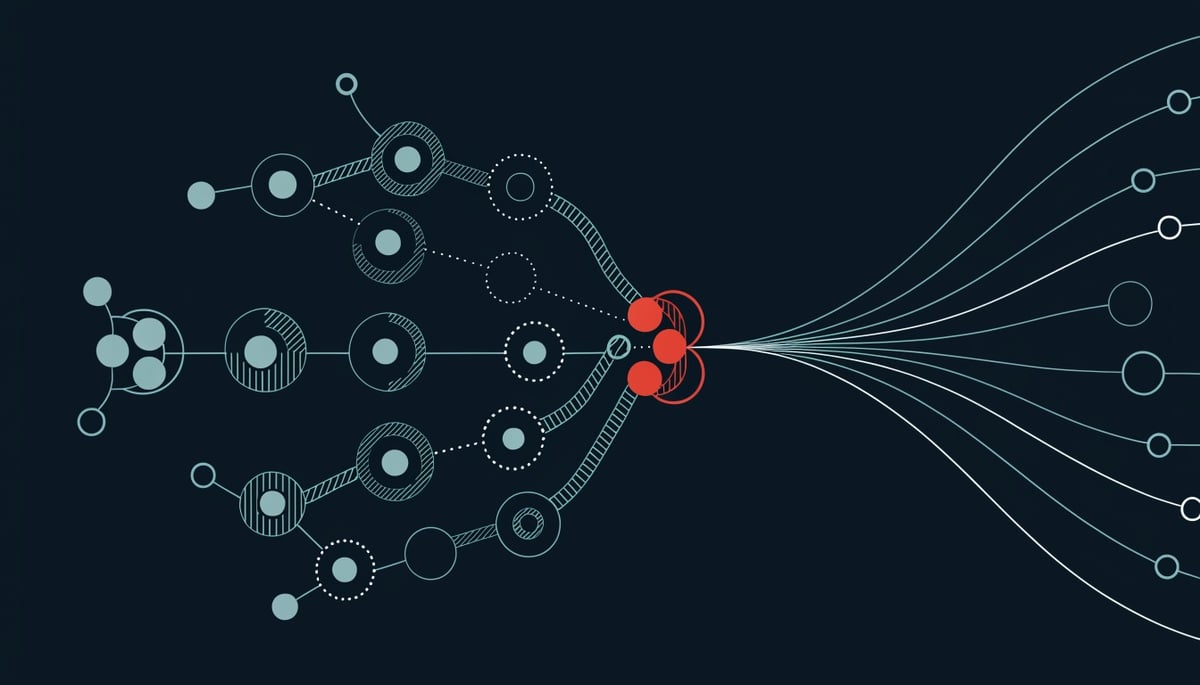
Professional Services Attack Chain
Detection Strategy: What Your Security Team Should Be Hunting For Right Now
The forensic evidence from 25 million alerts reveals specific detection opportunities that security teams consistently overlook. With 51% of confirmed endpoint compromises marked as "mitigated" by EDR vendors while infections remained active in memory, hunting teams need detection strategies that go beyond surface-level indicators.
Start with memory-based detection patterns that catch what EDR remediation misses. When hunting for active infections, focus on process injection behaviors that indicate post-exploitation activity. Look for processes spawning with unusual parent-child relationships—legitimate Windows services suddenly creating PowerShell instances, or svchost.exe launching with command-line arguments pointing to temporary directories. These anomalies often indicate malware establishing persistence after initial EDR detection.
Monitor LSASS access patterns beyond simple credential dumping alerts. Track processes that open handles to lsass.exe with specific access rights combinations: PROCESS_VM_READ combined with PROCESS_QUERY_INFORMATION signals memory scraping attempts. More importantly, baseline which legitimate processes in your environment normally interact with LSASS—backup software, security agents, and system management tools create noise that drowns out malicious activity. Document these patterns during normal operations to reduce false positives that contribute to alert fatigue.
Real-time detection priorities should focus on command and control beacons that masquerade as legitimate HTTPS traffic. Hunt for processes making periodic HTTPS connections with consistent timing intervals—every 60 seconds, every 5 minutes—especially to recently registered domains or IP addresses without corresponding DNS lookups. Network connections from processes running from user profile directories or temp folders warrant immediate investigation, as do HTTPS connections where the process name doesn't match expected network behavior patterns.
For file operation monitoring, track unusual access to browser credential stores and email client databases. Processes reading multiple SQLite databases from Chrome, Firefox, or Edge profile directories indicate credential harvesting. Similarly, non-Outlook processes accessing .ost or .pst files suggest email exfiltration attempts. These behaviors generate low-severity alerts because individual file reads appear benign, but the pattern reveals malicious intent.
Log hunting priorities differ from real-time detection. Focus on persistence mechanisms that survive reboots and security scans. Search Windows Event logs for Event ID 7045 (new service installations) where the service path contains encoded PowerShell commands or points to user-writable directories. Registry modifications to Run keys, scheduled task creation via Event ID 4698, and WMI event consumer registration all indicate attempts to maintain access.
Professional service environments generate unique baseline noise that masks these threats. Consultants regularly use remote access tools, transfer large datasets, and access multiple client environments—all behaviors that mirror attack patterns. Build detection logic that accounts for this reality: flag remote desktop connections from countries where your firm has no offices, PowerShell execution from users who aren't IT administrators, or file compression activities outside normal project timelines.
The investigation of 25 million alerts demonstrates that low-severity classifications hide approximately 54 real threats annually. By implementing memory-focused hunting, establishing environment-specific baselines, and prioritizing behavioral patterns over signature matching, security teams can surface these hidden compromises before they escalate into incidents requiring forensic reconstruction.
Immediate Response Actions for Professional Service Firms
Professional service firms face unique operational constraints when responding to security incidents—client deadlines don't pause for forensic investigations, and regulatory reporting windows create hard timelines that traditional incident response playbooks rarely address. The data from 25 million alerts reveals that firms discovering active compromises must balance immediate containment with maintaining business continuity, particularly when client data exposure triggers notification requirements under multiple jurisdictions.
Immediate Actions (Next 24 Hours)
Your first priority centers on containing potential credential compromise while maintaining client access. Reset passwords for all domain administrator accounts, service accounts with elevated privileges, and any accounts showing authentication from unusual geographic locations in the past 72 hours. This reset sequence should follow a staged approach—administrative accounts first, followed by service accounts during maintenance windows to minimize disruption.
Deploy temporary network segmentation between client data repositories and general corporate systems. Most professional service firms maintain shared drives or document management systems where multiple client matters reside. Create firewall rules that restrict lateral movement between these repositories, limiting access to only essential personnel while forensic analysis proceeds. For firms using cloud document platforms, enable conditional access policies that require reauthentication for downloads exceeding normal patterns.
Activate enhanced logging across all authentication systems, particularly focusing on failed login attempts, privilege escalation events, and unusual access patterns to sensitive client folders. Configure your SIEM or log aggregation platform to capture authentication events at verbose levels—you'll need this granular data for both forensic timeline reconstruction and potential regulatory reporting.
Short-Term Response (1-2 Weeks)
Conduct targeted threat hunting for persistence mechanisms commonly missed by automated tools. Focus memory analysis efforts on systems that handled sensitive client data in the past 90 days, looking for process injection indicators and unusual network connections. Deploy specialized forensic tools beyond standard EDR capabilities—memory acquisition tools that capture running processes, network connections, and loaded modules provide visibility into threats that survive EDR remediation attempts.
Review all client portal access logs for anomalous patterns, particularly focusing on after-hours downloads, bulk data exports, or access from IP addresses outside your typical client geography. Professional service firms often maintain multiple client-facing platforms—deal rooms, litigation repositories, audit workspaces—each requiring separate log analysis. Cross-reference access patterns with billing records to identify unauthorized access to dormant client matters.
Assess potential data exfiltration by analyzing outbound network traffic patterns during the suspected compromise window. Look for sustained data transfers to cloud storage services, particularly those using encrypted channels that bypass content inspection. Pay special attention to connections established outside business hours or to newly observed domains.
Long-Term Remediation (1-3 Months)
Implement privileged access management solutions that enforce time-based access to sensitive client systems. Rather than permanent elevated privileges, deploy just-in-time access models where administrative rights expire after defined periods. This approach maintains operational flexibility while reducing the window for credential abuse.
Establish dedicated security boundaries between client engagements using microsegmentation technologies. Each major client or matter should operate within its own security context, with access controls that prevent cross-contamination if one segment becomes compromised. This architectural change requires careful planning to maintain collaboration capabilities while enforcing isolation.
Deploy behavioral analytics platforms that baseline normal access patterns for each practice group and flag deviations that suggest account compromise. These systems learn typical document access patterns, login times, and data movement behaviors specific to your firm's operational rhythm, providing detection capabilities beyond signature-based approaches.
Reducing Alert Noise Without Missing Threats: A Practical Tuning Approach
The analysis of 25 million alerts exposes a fundamental truth about security operations: most organizations drown in noise because they've never properly calibrated their detection systems to their actual business environment. The result is predictable—security teams chase phantoms while real threats slip through in the deluge.
Professional service firms generate distinctive operational patterns that standard detection rules interpret as suspicious. Partners accessing client files at 2 AM during deal closings, consultants downloading gigabytes of financial data for analysis, IT administrators running PowerShell scripts across multiple endpoints—these legitimate activities trigger thousands of false positives daily.
The solution isn't turning off detection. It's teaching your security tools what normal actually looks like in your environment.
Baseline establishment requires systematic documentation of legitimate administrative behaviors. Track which service accounts regularly access multiple systems, document standard data transfer volumes between offices, and catalog approved remote access tools your consultants use. This baseline becomes your filter for separating genuine anomalies from business-as-usual activities that happen to match generic threat patterns.
Focus your detection engineering on high-confidence indicators rather than broad behavioral patterns. Instead of alerting on every PowerShell execution, tune rules to flag specific command combinations that indicate reconnaissance or credential harvesting. Rather than triggering on all large file transfers, concentrate on data movement to unusual external destinations or newly registered domains.
Professional service environments require risk-based alert prioritization that reflects actual exposure. Systems containing client data or merger documents warrant immediate investigation regardless of alert severity. Authentication attempts against partner accounts deserve higher priority than similar activity targeting intern credentials. File access patterns on deal servers matter more than identical behavior on marketing shares.
Implement progressive alert suppression based on verified false positive patterns. When investigation confirms legitimate activity, create narrow suppression rules that exclude only that specific pattern—not broad categories. A consultant's regular use of remote desktop from their home IP shouldn't suppress all RDP alerts, just that particular source-destination pair during expected hours.
Track three critical metrics to measure tuning effectiveness without creating blind spots. Alert reduction rate shows whether your efforts actually decrease noise—target 40-60% reduction in the first quarter through proper baselining. Detection latency measures time from initial suspicious activity to alert generation—this should decrease as you eliminate false positive investigations. Mean time to triage indicates whether remaining alerts receive faster analysis—expect 50% improvement as analysts stop chasing ghosts.
The data reveals that organizations achieving meaningful noise reduction without missing threats share common practices. They maintain living documentation of authorized administrative tools, update baselines quarterly to reflect business changes, and review suppression rules monthly to prevent drift. Most importantly, they treat every confirmed false positive as an opportunity to refine detection logic rather than simply closing the ticket.
Consider implementing contextual enrichment before alerts reach analysts. Automatically append user role information, asset criticality scores, and recent legitimate activity patterns to each alert. This context transforms a generic "suspicious PowerShell execution" into "PowerShell launched by authorized admin on non-critical test server during maintenance window"—enabling instant triage decisions.
The goal isn't fewer alerts. It's better alerts that warrant investigation.
Why Nation-State and Criminal Operations Target Professional Service Firms
Professional service firms represent the perfect convergence point for both nation-state and criminal operations, offering access to intellectual property, strategic intelligence, and privileged client networks that serve multiple adversarial objectives simultaneously. The forensic analysis of 25 million alerts reveals these organizations face a dual-threat landscape where sophisticated actors leverage identical toolsets and techniques, making attribution increasingly irrelevant to the practical reality of defense.
Nation-state actors target professional service firms as intelligence multipliers. A single compromised consulting firm provides visibility into dozens of corporate strategies, government contracts, and emerging market movements. Law firms handling international arbitration cases offer insights into trade disputes and regulatory negotiations worth billions in economic advantage. Accounting practices managing cross-border transactions reveal supply chain relationships and financial vulnerabilities that inform both economic espionage and strategic planning.
The intelligence value extends beyond immediate targets. Professional service firms maintain persistent access to client environments through VPN connections, shared document repositories, and integrated financial systems. Compromising a single managed service provider creates pathways into hundreds of downstream organizations, transforming routine business relationships into intelligence collection infrastructure.
Criminal groups pursue different objectives through identical access points. Client databases containing personally identifiable information, financial records, and corporate secrets represent immediate monetization opportunities through extortion, fraud, or underground market sales. The interconnected nature of professional service operations amplifies ransomware impact—encrypting a law firm's case management system during active litigation or an accounting firm's systems during tax season creates pressure points where victims pay quickly to avoid cascading client impacts.
The convergence becomes visible in the tooling. Both nation-state and criminal operators deploy the same post-exploitation frameworks documented in the alert analysis. The presence of these tools in memory reveals operational overlap that complicates response priorities. A law firm discovering active infections cannot determine whether they face intellectual property theft for competitive advantage or preparation for ransomware deployment until the attack progresses further.
This attribution ambiguity compounds the alert fatigue problem. Security teams confronting thousands of daily notifications cannot easily distinguish between reconnaissance activity from advanced persistent threats and commodity malware infections. The operational result is predictable—teams prioritize based on severity labels rather than potential actor intent, missing early-stage nation-state activity that generates only informational alerts while focusing on noisier criminal campaigns.
Regulatory exposure amplifies the cost of these missed detections exponentially. Professional service firms operate under overlapping compliance frameworks—GDPR for European client data, SOX for financial audit clients, HIPAA for healthcare consulting engagements, and industry-specific requirements for government contractors. Each framework carries distinct breach notification timelines and penalty structures. A single undetected compromise touching multiple client datasets triggers reporting obligations across jurisdictions, with penalties calculated per record, per framework, per geography.
The financial impact extends beyond regulatory fines. Professional liability insurance rarely covers the full cost of client notification, credit monitoring, and litigation that follows data exposure. Reputational damage proves harder to quantify but equally devastating—firms lose client trust accumulated over decades when adversaries access confidential strategies or sensitive negotiations through their systems.