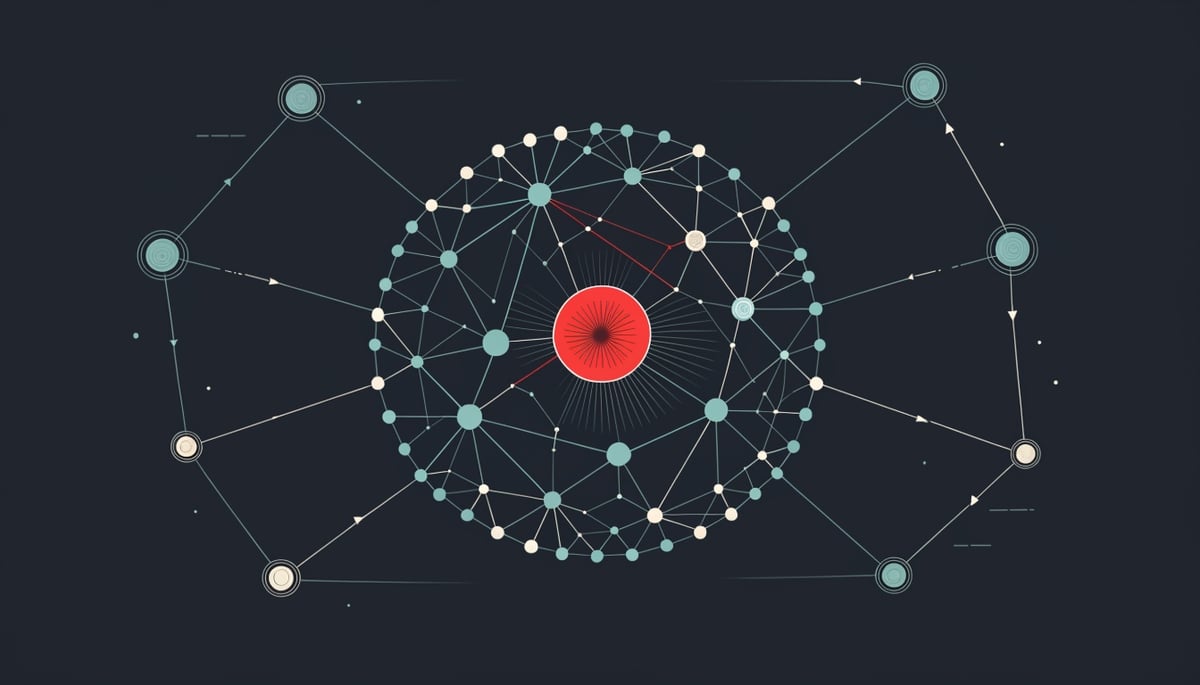
Operation Endgame's disruption of SocGholish infrastructure represents far more than a routine malware cleanup—it's the dismantling of a criminal ecosystem that transformed legitimate business websites into weapons against their own visitors. The coordinated action by Dutch, Canadian, German, and U.S. authorities removed 106 malicious servers and cleaned 14,971 compromised WordPress sites, each one representing an organization unknowingly participating in cyberattacks against their customers, partners, and employees. (Source: The Hacker News)
The scale reveals an uncomfortable truth about modern cyber risk: your organization's security depends not just on your own defenses, but on every website your employees visit during their workday. SocGholish operators compromised sites across virtually every industry sector—from nonprofits and schools to healthcare facilities and legal firms. When employees visited these legitimate-looking sites for research, vendor information, or routine business tasks, they encountered fake browser update prompts that appeared completely authentic.
What made these 14,971 sites particularly dangerous was their trusted status. Unlike obvious phishing domains, these were real businesses with established reputations—the law firm you've worked with for years, the medical supplier your procurement team orders from monthly, the industry publication your executives read daily. Domain shadowing techniques allowed criminals to create malicious subdomains that blended seamlessly with legitimate infrastructure, making detection nearly impossible for both site owners and visitors.
The business consequences extended far beyond the infected sites themselves. Data from Infoblox indicates that approximately 55% of their cloud customers attempted to reach SocGholish infrastructure this year alone. This means more than half of monitored organizations had employees who nearly downloaded malware that serves as a gateway for ransomware operators including LockBit, RansomHub, and the notorious Evil Corp group. Each successful infection created potential entry points for attacks that have historically resulted in multi-day operational shutdowns and significant financial losses.
The sophisticated traffic distribution system employed by SocGholish meant that not every visitor to a compromised site received malware—criminals filtered victims based on their country, browser type, and operating system. This selective targeting helped the operation remain undetected since 2017, with many site owners unaware their platforms were being weaponized. Organizations in government, banking, utilities, and transportation sectors faced particularly high exposure rates according to the enforcement data.
Perhaps most concerning for business leaders is the revelation that SocGholish operates as a commercial service, accepting traffic from multiple affiliates who get paid for delivering potential victims. This business model ensures continuous innovation and expansion—when authorities shut down one distribution channel, others quickly emerge. The operation's use of commercial traffic management platforms like Keitaro and zTDS demonstrates how legitimate business tools become weaponized in the criminal economy.
"With these actions we deprive cybercriminals of access to infected computer systems. This prevents further damage to the digital systems of citizens, businesses and organizations worldwide and limits the spread of malware."
For the 14,971 organizations whose WordPress sites were cleaned, the immediate risk has passed. But the underlying vulnerability that enabled their compromise—outdated content management systems, weak credentials, and suspicious administrative accounts—remains a concern across millions of other business websites. The cleanup represents a reprieve, not immunity, from future targeting by the next wave of initial access brokers seeking to monetize corporate network access.
The SocGholish Supply Chain: How Legitimate Updates Became Malware Delivery
The transformation of legitimate software updates into malware delivery mechanisms represents one of cybersecurity's most insidious deceptions. SocGholish weaponized this trust through a multi-layered JavaScript framework that converted compromised WordPress sites into sophisticated distribution hubs, each one serving different malware based on visitor characteristics.
The initial compromise phase targeted WordPress installations through multiple infection vectors. Attackers injected malicious JavaScript directly into webpage code or deployed intermediate JS files that loaded the infection payload. This approach gave operators flexibility—they could modify delivery mechanisms without touching the original compromise, making detection significantly harder for site administrators who might only check their main page code.
Domain shadowing amplified the threat's stealth capabilities. After gaining access to legitimate domain registrar accounts, attackers created malicious subdomains beneath trusted apex domains. These subdomains used common host names that blended seamlessly with legitimate DNS infrastructure while pointing to criminal-controlled external servers. A company's trusted domain reputation became the perfect camouflage for malicious activity.
The fake update lures exploited fundamental user behaviors around security hygiene. Compromised sites displayed convincing prompts for Chrome or Firefox browser updates—messages that security-conscious users had been trained to trust and act upon. This social engineering component transformed security awareness into a vulnerability, as users who thought they were protecting themselves actually initiated the infection chain.
Key Insight: The fake update lures exploited fundamental user behaviors around security hygiene.
Traffic Distribution Systems formed the operational backbone of this ecosystem. Keitaro and zTDS provided commercial filtering capabilities that examined visitor characteristics before deciding their fate. These systems evaluated operating systems, browser types, and geographic locations to determine whether visitors received malicious payloads or legitimate content. Parrot TDS and JunkyTDS operated as specialized traffic brokers, accepting visitors from affiliates and routing qualified targets to SocGholish infrastructure in exchange for payment.
The affiliate ecosystem created a marketplace for compromised traffic. Website operators who had compromised sites but lacked sophisticated malware capabilities could monetize their access by selling visitor traffic to SocGholish operators. Affiliates fingerprinted visitors, then passed potential victims through embedded links to the main framework. This commercial relationship meant a single compromised WordPress site could serve multiple criminal operations simultaneously.
Secondary payload delivery demonstrated the framework's versatility as a criminal platform. Gholoader, another JavaScript-based loader, frequently arrived as the first-stage payload, establishing persistence before downloading additional malware. MintsLoader served similar functions but with different evasion techniques, giving operators redundancy if one loader was detected. These intermediate stages then retrieved final payloads: AsyncRAT for remote access, NetSupport RAT for legitimate-looking remote control, and GhostWeaver for advanced persistence.
WordPress sites proved particularly valuable because of their ubiquity and trust relationships. Educational institutions, healthcare providers, and government agencies operated WordPress installations that visitors inherently trusted. When a hospital website prompted for a browser update, visitors rarely questioned its legitimacy. This trust, combined with WordPress's massive deployment base and frequent plugin vulnerabilities, created an ideal hunting ground for initial access brokers who could compromise sites at scale, then sell access to the highest bidder among ransomware operators and espionage groups.
SocGholish Attack Chain
Immediate Detection and Response Actions for Affected WordPress Installations
Organizations running WordPress installations need immediate visibility into potential SocGholish infections that may have persisted despite cleanup efforts. The operation's notification to affected site owners represents just the beginning of remediation—attackers often leave secondary backdoors and persistence mechanisms that survive initial cleanup attempts.
Start today by examining your WordPress database for unauthorized administrator accounts created between 2017 and present. Domain shadowing techniques employed by SocGholish operators mean checking your DNS provider's control panel for unexpected subdomains pointing to external infrastructure. These subdomains often use common names like "cdn," "assets," or "static" to blend with legitimate infrastructure while directing traffic to attacker-controlled servers.
Review your web server access logs for patterns indicating traffic distribution system (TDS) activity. Look for repeated redirects to unfamiliar domains, particularly those occurring after visitors arrive from specific geographic regions or browser types. The malware's selective targeting means infections might only activate for users matching certain criteria—your logs may show normal traffic alongside malicious redirections happening simultaneously.
This week, audit all WordPress plugins and themes for modifications beyond their last official updates. SocGholish infections involved direct JavaScript injections into existing files rather than installing new plugins. Compare your active theme's functions.php and header.php files against clean versions from the theme developer. Check for obfuscated JavaScript code, particularly base64-encoded strings or scripts loading from external domains.
Examine your .htaccess files for unexpected rewrite rules that could facilitate traffic filtering. Keitaro and zTDS integrations often modify server configuration files to enable conditional redirects based on visitor fingerprinting. These modifications persist even after removing infected WordPress files, continuing to expose visitors to malicious infrastructure.
Deploy file integrity monitoring specifically configured for WordPress environments. Monitor changes to core WordPress files, particularly wp-config.php, wp-settings.php, and any files within wp-admin directories. Set alerts for new file creation in directories that shouldn't contain executable code, such as wp-content/uploads.
Long-term protection requires implementing Web Application Firewall (WAF) rules targeting JavaScript-based loader patterns. Configure your WAF to block requests containing encoded JavaScript payloads in URL parameters, a common technique for delivering secondary infections. Monitor for attempts to access non-existent browser update pages on your domain—these fake update lures remain a primary SocGholish distribution method.
Establish continuous monitoring for DNS changes at your registrar level. Enable notifications for any subdomain creation or modification, preventing future domain shadowing attempts. Many registrars offer API access for automated monitoring—integrate these checks into your security operations to catch unauthorized changes before they're weaponized.
Document all WordPress user accounts with administrative privileges, including their creation dates and last login times. SocGholish operators frequently created dormant accounts for future access. Remove any accounts that cannot be traced to legitimate administrators, and implement mandatory password resets for all remaining privileged accounts. The cleanup operation addressed known infections, but your ongoing vigilance prevents reinfection through compromised credentials or overlooked backdoors.
Why This Threat Affects Every Industry: From Healthcare to Finance to Government
The geographic distribution of compromised WordPress sites reveals a disturbing pattern: attackers deliberately targeted organizations across every major economic sector, from banking institutions in Singapore to government contractors in the U.S. to healthcare providers in Germany. This wasn't random opportunism—it was strategic positioning for maximum financial and intelligence value.
Key Insight: The geographic distribution of compromised WordPress sites reveals a disturbing pattern: attackers deliberately targeted organizations across every major economic sector, from banking institutions in Singapore to government contractors in the U.S.
Consider what happens when a utility company's WordPress site becomes infected. These organizations maintain critical infrastructure control systems, vendor portals, and employee training platforms—all potential pivot points for attackers seeking to disrupt power grids or water treatment facilities. The traffic distribution systems employed by SocGholish operators specifically filtered visitors based on their operating systems and browsers, allowing them to deliver specialized payloads to employees versus external visitors.
Insurance companies represent particularly valuable targets given their vast repositories of personal health information, financial records, and claims data spanning millions of policyholders. When these organizations unknowingly host SocGholish infections, every customer checking their policy status or filing a claim becomes a potential victim. The malware's ability to fingerprint visitors means attackers can identify high-value targets—executives, system administrators, or employees with elevated privileges—and serve them customized payloads designed for credential harvesting or lateral movement into core business systems.
The transportation sector's compromise carries implications beyond stolen logistics data. Airlines, shipping companies, and rail operators rely on interconnected scheduling systems, cargo manifests, and passenger databases. A single infected WordPress site at a regional airport could provide reconnaissance data about cargo shipments, passenger movements, or maintenance schedules—intelligence valuable to both criminal organizations planning physical thefts and nation-state actors mapping critical infrastructure dependencies.
Educational institutions emerged as prime targets not for their own data, but as stepping stones to more valuable networks. Universities collaborate with defense contractors, pharmaceutical companies, and government research facilities. Students and faculty regularly access these partner networks using credentials that, once stolen through fake browser updates, grant attackers legitimate entry into otherwise hardened environments. The widespread nature of academic collaboration means a single compromised university site could facilitate breaches across dozens of partner organizations.
IT consulting firms present the ultimate supply chain risk. These organizations maintain administrative access to client environments, deploy software updates, and handle sensitive migrations. When their WordPress sites serve malicious JavaScript, every client interaction becomes a potential infection vector. The trust relationship between consultants and clients means security warnings might be dismissed as false positives, allowing infections to spread unchecked through managed service provider channels.
Financial services organizations face dual exposure: direct theft of banking credentials and regulatory compliance failures. The involvement of ransomware operators means compromised institutions risk not only encrypted systems but also public disclosure of customer data if ransom demands aren't met. The collaboration between initial access brokers and ransomware groups creates a marketplace where access to a small credit union's network might sell for thousands of dollars to operators planning million-dollar ransom demands.
Government agencies and their contractors hold intelligence data, citizen records, and national security information that attracts both criminal and state-sponsored interest. The domain shadowing techniques observed in these compromises allowed attackers to create legitimate-looking subdomains that bypassed security filters, turning trusted .gov infrastructure into malware distribution points targeting other agencies and private sector partners.
Hardening WordPress Against TDS and Loader Malware: Technical Defenses
WordPress installations become attractive targets for traffic distribution system operators precisely because of their predictable file structures and widespread plugin ecosystems. The combination of known directory paths and third-party code creates multiple entry points that TDS operators exploit to establish persistent footholds.
Your WordPress security posture against loader malware requires understanding how these threats operate at the web server level. Gholoader and MintsLoader leverage JavaScript obfuscation techniques that standard WordPress security plugins miss because they execute within legitimate-looking update prompts. These loaders establish initial compromise, then download secondary payloads based on visitor characteristics—making detection challenging without proper server-side monitoring.
Start by implementing file integrity monitoring specifically tuned for WordPress core files. Monitor /wp-admin/, /wp-includes/, and /wp-content/themes/ directories for unexpected JavaScript modifications. Any changes to index.php files within these directories should trigger immediate alerts, as TDS operators frequently inject their redirection code here.
Web Application Firewall rules need specific patterns to block TDS infrastructure like Keitaro and zTDS. These systems use distinctive URL parameters for traffic filtering—look for patterns containing "?utm_" followed by base64-encoded strings, or requests with multiple sequential redirects through different domains within milliseconds. Configure your WAF to block requests containing JavaScript that attempts to fingerprint browser versions or operating systems through navigator.userAgent calls combined with immediate redirects.
Network-level detection for command-and-control callbacks from AsyncRAT and NetSupport RAT requires monitoring for specific behavioral patterns. AsyncRAT typically establishes connections on ports 6606, 7707, or 8808, while NetSupport RAT uses port 5405 for its gateway connections. Both generate periodic keepalive packets at predictable intervals—AsyncRAT every 60 seconds, NetSupport every 30 seconds during active sessions.
Plugin and theme vetting processes must extend beyond reputation checks. Before installing any WordPress extension, decompress the package and search for encoded PHP functions using grep -r "eval\|base64_decode\|gzinflate" . within the plugin directory. Legitimate plugins rarely need these functions, while compromised ones frequently use them to hide malicious payloads.
Making your WordPress installation unattractive to TDS operators involves removing predictable attack surfaces. Disable XML-RPC entirely if not needed—it's a favorite injection point. Change the default /wp-login.php path using server-side redirects rather than plugins, as plugins can be bypassed. Implement rate limiting at the web server level for POST requests to prevent automated injection attempts.
Configure your web server to reject requests containing specific TDS signatures. Parrot TDS installations often include "parrot" or "prrt" in their callback URLs, while JunkyTDS uses distinctive base64 patterns in cookie values. Block any request where the referrer header contains known TDS domains or where multiple location headers appear in rapid succession.
The most effective defense combines proactive hardening with continuous monitoring. TDS operators target WordPress sites with outdated plugins, default configurations, and predictable structures. By implementing these technical controls and maintaining vigilant monitoring for loader signatures, you transform your WordPress installation from an attractive target into a hardened asset that TDS operators will bypass in favor of easier victims.
The Ransomware Connection: Why This Cleanup Matters Beyond Malware Removal
The connection between SocGholish and ransomware deployment reveals a critical gap in how organizations understand website compromise. When Dutch authorities cleaned those 14,971 WordPress sites, they disrupted active command infrastructure—but the ransomware payloads already delivered through these channels remain active threats within victim networks.
The relationship between initial access brokers and ransomware operators follows a predictable economic model. SocGholish provides the entry point, then sells or shares that access to specialized ransomware groups who handle encryption and extortion. This division of labor means a cleaned WordPress site represents only the first stage of a multi-phase attack that may have progressed weeks or months ago.
Consider the timeline: SocGholish has operated since 2017, giving operators nearly nine years to establish persistence across victim networks. The malware's connection to LockBit ransomware operations means organizations infected even briefly could have dormant ransomware waiting for activation. RansomHub deployments through SocGholish channels demonstrate how modern ransomware groups leverage existing botnets rather than building their own infrastructure.
The RomCom threat actors' use of SocGholish to deliver Mythic Agent highlights another dimension—espionage operations running parallel to ransomware campaigns. While security teams focus on preventing encryption events, attackers may have already exfiltrated intellectual property, customer databases, and strategic communications through the same compromised WordPress channels.
Data exfiltration precedes ransomware deployment in modern double-extortion schemes. Attackers using SocGholish-compromised sites as initial access points typically spend 15-30 days mapping networks, identifying valuable data, and establishing redundant backdoors before deploying ransomware. The cleanup operation interrupted this kill chain for current victims, but organizations compromised earlier in the campaign cycle may have already progressed to later stages.
The involvement of Evil Corp (tracked as DEV-0243 and Indrik Spider) adds financial sanctions implications. Organizations unknowingly infected through SocGholish may have facilitated transactions with sanctioned entities, creating regulatory exposure beyond the immediate security incident. Payment of ransoms to Evil Corp-affiliated groups violates U.S. Treasury sanctions, leaving victims unable to pay even if they choose to negotiate.
Dridex banking trojan deployments through SocGholish channels mean financial fraud may be occurring alongside ransomware preparations. Attackers harvest banking credentials while ransomware operators prepare encryption routines—dual monetization strategies that maximize criminal profit from each compromised organization.
The Raspberry Robin (Roshtyak) connection introduces worm-like propagation capabilities. Unlike traditional ransomware that requires manual lateral movement, Raspberry Robin self-propagates through USB devices and network shares. Organizations may have cleaned their WordPress sites but missed Raspberry Robin infections spreading autonomously through their internal networks.
AsyncRAT and NetSupport RAT deployments provide persistent remote access that survives website cleanup efforts. These remote administration tools blend with legitimate IT management software, making detection challenging without behavioral analysis. Attackers maintain access through these secondary implants even after primary SocGholish infrastructure gets dismantled.
"Approximately 55% of Infoblox cloud customers attempted to reach SocGholish infrastructure this year alone"
This statistic underscores the operation's true scope—the cleaned WordPress sites represent detected compromises, not prevented attacks. Organizations whose users visited infected sites may have active infections despite never hosting compromised WordPress installations themselves. The disruption prevents future infections but doesn't remediate existing compromises within enterprise networks.