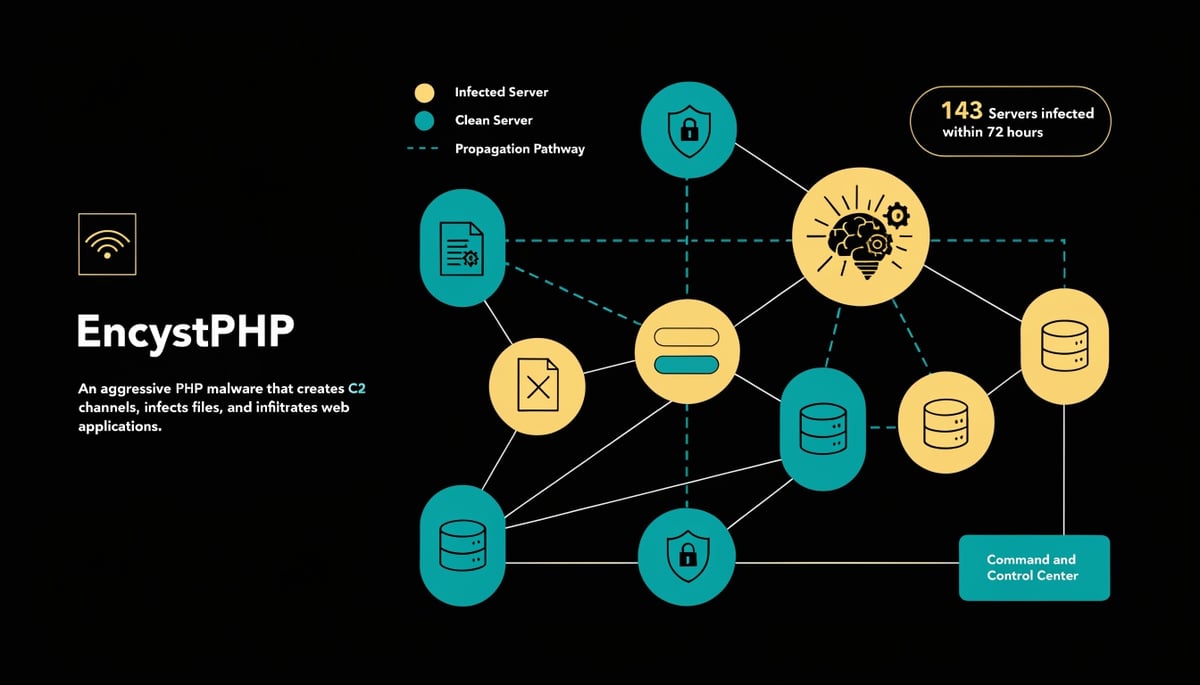
Professional service firms have become prime targets for EncystPHP webshell deployments due to the unique value of their digital assets and network positioning. These organizations maintain extensive repositories of sensitive client information, from merger and acquisition details to confidential legal strategies and proprietary financial models. (Source: Isc)
The targeting of FreePBX systems specifically reveals a calculated approach by attackers. Professional service firms often rely on VoIP infrastructure to maintain constant communication with clients across global offices. A compromised phone system provides attackers with more than just call records - it offers a foothold into the broader corporate network where client databases, billing systems, and document management platforms reside.
Key Insight: A compromised phone system provides attackers with more than just call records - it offers a foothold into the broader corporate network where client databases, billing systems, and document management platforms reside.
The financial exposure for professional service firms extends far beyond typical breach costs. When client confidential information is compromised, firms face immediate contractual penalties, potential malpractice claims, and mandatory disclosure obligations across multiple jurisdictions. A single breach affecting multiple client matters can trigger dozens of separate notification requirements, each with its own regulatory timeline and potential penalties.
The backdoor accounts being deployed - including 'asterisk', 'freepbxuser', and 'supermaint' - demonstrate attackers' understanding of how professional service firms operate. These account names blend seamlessly with legitimate system accounts, allowing persistent access that can go undetected during routine security audits. This persistence is particularly damaging in environments where client engagements span months or years.
Professional service firms also represent valuable pivot points into client networks. Many firms maintain VPN connections, shared document repositories, or direct system integrations with their clients' environments. An attacker with sustained access to a law firm's or consultancy's infrastructure gains indirect access to potentially hundreds of corporate networks, multiplying the value of a single successful compromise.
The reputational damage from such breaches carries unique weight in professional services. Trust forms the foundation of client relationships, and a security incident can destroy decades of carefully built credibility. Clients expect their advisors to maintain security standards that exceed their own, making any breach particularly damaging to future business development efforts.
Insurance coverage gaps compound the financial risk. Many professional liability policies exclude or severely limit coverage for cyber incidents, while cyber insurance policies may not fully cover the unique exposures of professional service firms, such as loss of client privilege or breach of fiduciary duty. This leaves firms exposed to potentially catastrophic uninsured losses.
The timing of these attacks also aligns with periods of vulnerability in professional service operations. Many firms have rapidly adopted remote communication tools and cloud-based phone systems without corresponding security investments. The EncystPHP webshell's ability to establish persistence through multiple backdoor accounts suggests attackers are prepared for long-term campaigns, potentially timing data exfiltration to coincide with sensitive transactions or litigation milestones.
How EncystPHP Webshells Work and What They Enable
The EncystPHP webshell operates as a sophisticated backdoor mechanism that transforms compromised web servers into remote command execution platforms. Unlike traditional malware that requires installation on endpoints, webshells like EncystPHP embed themselves directly into web application code, making them accessible through standard HTTP requests while evading conventional antivirus detection.
The webshell's authentication mechanism relies on parameter-based access control rather than traditional login forms. Attackers send GET requests containing an MD5-like string parameter that the webshell compares against its hard-coded value. This approach allows attackers to maintain access while appearing as normal web traffic in server logs. The parameter name "md5" itself serves as misdirection - the webshell performs a simple string comparison rather than actual hash validation, accepting any matching string regardless of whether it represents a genuine MD5 hash.
Once authenticated, EncystPHP provides attackers with comprehensive system control through PHP's built-in command execution functions. The webshell processes commands sent through HTTP parameters, executes them on the underlying server, and returns results through the web response. This creates an interactive shell environment accessible from any browser or automated script, eliminating the need for specialized malware or command-and-control infrastructure.
The deployment mechanism reveals the webshell's integration with broader attack campaigns. Attackers exploit FreePBX vulnerabilities to download and execute the webshell through system commands embedded in telephony requests. The attack chain uses the Originate action with a Local channel to trigger wget commands that retrieve the webshell from attacker-controlled servers. This technique bypasses traditional file upload restrictions by leveraging the phone system's ability to execute system commands during call processing.
Key Insight: Attackers exploit FreePBX vulnerabilities to download and execute the webshell through system commands embedded in telephony requests.
Beyond immediate command execution, EncystPHP establishes multiple persistence mechanisms to maintain long-term access. The webshell creates backdoor accounts across various system services, targeting usernames commonly found in VoIP environments like asterisk, freepbxuser, and asteriskuser. Each account receives an identical password hash, simplifying credential management for attackers while ensuring redundant access paths. The command structure includes error suppression (2>/dev/null) and conditional execution (|| true), preventing failed account creation attempts from generating alerts or interrupting the infection process.
Professional service environments face heightened risks from webshell deployments due to their complex web infrastructure and regulatory requirements. Law firms, accounting practices, and consulting agencies typically run multiple web applications for client portals, document management, and collaboration platforms. A webshell embedded in any of these systems provides attackers with access to client communications, financial records, and strategic planning documents. The webshell's ability to execute arbitrary commands enables data exfiltration through standard web protocols, bypassing data loss prevention systems configured to monitor email and file transfers.
The persistence and stealth characteristics of webshells make them particularly dangerous in environments where system availability takes precedence over security. Professional service firms often hesitate to take production systems offline for investigation, allowing webshells to operate undetected for extended periods. The webshell's integration with legitimate web application files means it survives routine updates and patches, requiring deliberate forensic analysis to identify and remove.
Immediate Detection and Response Actions
Organizations running FreePBX systems need to execute specific detection steps immediately to identify potential EncystPHP webshell compromises. The scanning activity observed on April 13th indicates active exploitation attempts that may have already succeeded against unpatched systems.
Today's Priority Actions: Begin by searching your web directories for files matching the EncystPHP signature pattern. Look specifically for /admin/modules/phones/ajax.php and any PHP files containing the string comparison logic that accepts MD5-like parameters. The webshell typically embeds itself within legitimate-looking administrative paths to avoid casual detection.
Check your web server access logs for GET requests containing the parameter ?md5=cf710203400b8c466e6dfcafcf36a411 or similar 32-character strings. These requests indicate reconnaissance attempts to locate deployed webshells. Pay particular attention to requests originating from IP address 160.119.76.250, though attackers frequently rotate infrastructure.
Examine system authentication logs for the creation or modification of user accounts named hima, sugarmaint, spamfilter, asteriskuser, supports, freepbxuser, supermaint, or juba. These accounts represent backdoor access mechanisms that persist even after webshell removal. The attackers use identical password hashes across all accounts: $1$nRz1Cbtk$6DnGs37n.OpPcgejUfp9p.
This Week's Detection Enhancements: Deploy web application firewall rules that block requests to /restapps/applications.php containing the linestate parameter with double-dollar-sign patterns. These requests attempt to exploit FreePBX command injection vulnerabilities to download and execute the webshell installer.
Enable verbose PHP execution logging to capture all system() and exec() function calls. The EncystPHP webshell relies on these functions to execute operating system commands received through web requests. Configure your logging to record the full command string, source IP, and timestamp for forensic analysis.
Implement file integrity monitoring on your FreePBX installation directories, particularly /admin/modules/ and /restapps/. Any new PHP file creation or modification in these paths warrants immediate investigation, as legitimate FreePBX updates follow predictable deployment patterns.
Long-term Defensive Improvements: Transition your FreePBX deployment to containerized architecture where the web application runs with minimal privileges. Container isolation prevents webshells from accessing the underlying host system or persisting across container restarts.
Deploy code integrity verification that compares running PHP files against known-good hashes from your FreePBX vendor. This approach detects both webshell insertions and legitimate file modifications that introduce vulnerabilities.
Configure your network segmentation to isolate VoIP infrastructure from general corporate systems. Even successful webshell deployments remain confined to the telephony segment, preventing lateral movement to databases or file servers containing client information.
Monitor outbound connections from your FreePBX servers to external IP addresses on non-standard ports. The webshell installation process downloads additional payloads from attacker-controlled infrastructure at addresses like 45.95.147.178, creating detectable network signatures during the compromise chain.
Scanning Signatures and Network Indicators
The network reconnaissance patterns associated with EncystPHP deployments reveal distinct behavioral signatures that security teams can leverage for early detection. The scanning infrastructure operates on non-standard ports, with attackers specifically targeting port 8000 alongside traditional web service ports, indicating deliberate attempts to locate misconfigured or development instances of FreePBX systems.
The HTTP request structure contains several distinctive elements that differentiate these scans from legitimate traffic. The User-Agent string "Mozilla/5.0 (X11; Linux x86_64; rv:89.0) Gecko/20100101 Firefox/89.0" presents as a Linux-based Firefox browser, yet the automated nature of the requests and their targeting of administrative paths betrays their malicious intent. This specific User-Agent version has been consistently observed across multiple scanning campaigns, suggesting either coordinated activity or the use of shared attack toolkits.
The authentication bypass attempts follow a predictable pattern. The webshell expects GET requests to /admin/modules/phones/ajax.php with the parameter structure ?md5=[32-character-string]. While the observed value cf710203400b8c466e6dfcafcf36a411 appears frequently, the parameter accepts any matching string configured during webshell deployment. This flexibility means defenders cannot rely solely on blocking known parameter values.
Network traffic analysis reveals secondary exploitation attempts targeting FreePBX's call origination functionality. The requests to /restapps/applications.php include embedded command injection payloads within legitimate-looking telephony parameters. The linestate parameter contains placeholder values like $$LINESTATE$$ while the actual payload hides within the Application and data fields, attempting to download and execute remote scripts from attacker-controlled infrastructure at IP address 45.95.147.178.
The command injection attempts utilize the Local/DONTCALL@macro-dial channel specification, exploiting FreePBX's Asterisk integration to achieve system-level command execution. The payload structure follows this format: Application: system with data containing wget commands pointed at remote PHP scripts, subsequently executed through bash interpreters redirected to temporary directories.
Post-compromise network indicators include outbound connections to specific command and control servers. The observed infrastructure at 160.119.76.250 hosts an unconfigured web server, likely serving as a staging point for further attacks rather than the primary command infrastructure. This separation of scanning and payload delivery infrastructure complicates attribution and takedown efforts.
The backdoor account creation attempts generate predictable network signatures. The webshell executes chpasswd commands with the -e flag, setting identical password hashes across multiple system accounts including root, hima, asterisk, sugarmaint, spamfilter, asteriskuser, supports, freepbxuser, supermaint, and juba. The consistent hash value $1$nRz1Cbtk$6DnGs37n.OpPcgejUfp9p. across all accounts creates a unique fingerprint for this specific campaign.
Security teams should monitor for HTTP GET requests containing 32-character alphanumeric strings in md5 parameters, particularly when directed at administrative PHP endpoints. The combination of port 8000 usage, Linux Firefox User-Agent strings, and requests to /admin/modules/phones/ paths creates a high-confidence detection signature. Additionally, any outbound connections from web servers to the identified attacker infrastructure addresses warrant immediate investigation, as these likely indicate successful webshell deployment rather than mere scanning activity.
Hardening Web-Facing Systems Against Reconnaissance
The reconnaissance patterns observed against FreePBX installations reveal fundamental weaknesses in how organizations configure their web-facing infrastructure. The attackers targeting these systems demonstrate patience and precision, first mapping exposed services before deploying their payloads.
PHP execution controls represent your first line of defense against webshell functionality. The EncystPHP webshell relies on PHP's ability to execute system commands through functions that many web applications never actually need. Disabling exec, system, shell_exec, passthru, and proc_open in your php.ini configuration immediately neutralizes the webshell's command execution capabilities. This change takes minutes to implement but requires testing against your existing applications to ensure they don't rely on these functions for legitimate operations.
File upload restrictions form the second defensive layer. The attack chain shows webshells being downloaded directly to /tmp directories before execution. Implementing strict upload policies means configuring your web server to reject PHP files in upload directories entirely. Set the upload_tmp_dir directive to a location outside your web root and configure Apache or Nginx to deny PHP execution in any user-writable directories. This prevents attackers from using your own infrastructure as a staging ground.
Directory traversal protections stop attackers from exploring beyond their initial foothold. The scanning activity targets administrative modules at predictable paths like /admin/modules/phones/. Configure your web server with open_basedir restrictions that confine PHP scripts to specific directories. This containment strategy means even if attackers compromise one component, they cannot pivot to explore your broader filesystem structure.
Web Application Firewalls provide pattern-based blocking of known webshell signatures. The GET requests containing MD5-like parameters follow predictable patterns that WAF rules can identify and block. Configure your WAF to flag requests containing suspicious parameter names combined with 32-character hexadecimal strings. The automated nature of these scans means they rarely adapt to WAF blocking in real-time, giving you immediate protection while you implement deeper hardening measures.
Implementation prioritization determines your defensive timeline. Within hours, you can disable dangerous PHP functions and implement basic WAF rules - these changes require minimal testing and provide immediate protection. Over the next few days, focus on file upload restrictions and directory traversal protections, which need more careful configuration to avoid breaking legitimate functionality. The week-long projects involve comprehensive WAF tuning and implementing application-specific security policies that account for your unique operational requirements.
The connection attempts on port 8000 indicate attackers specifically hunt for development or testing instances that administrators assume are safe behind obscurity. These non-standard ports often bypass corporate firewall rules designed for standard web traffic. Closing or properly securing these alternative access points eliminates reconnaissance opportunities that attackers actively exploit.
Runtime application self-protection technologies can detect when PHP applications attempt unusual system calls or file operations. These solutions monitor PHP execution at the interpreter level, catching webshell behavior even when the malicious code is heavily obfuscated. While more complex to deploy than configuration changes, they provide defense against zero-day webshells that haven't yet been cataloged by signature-based systems.