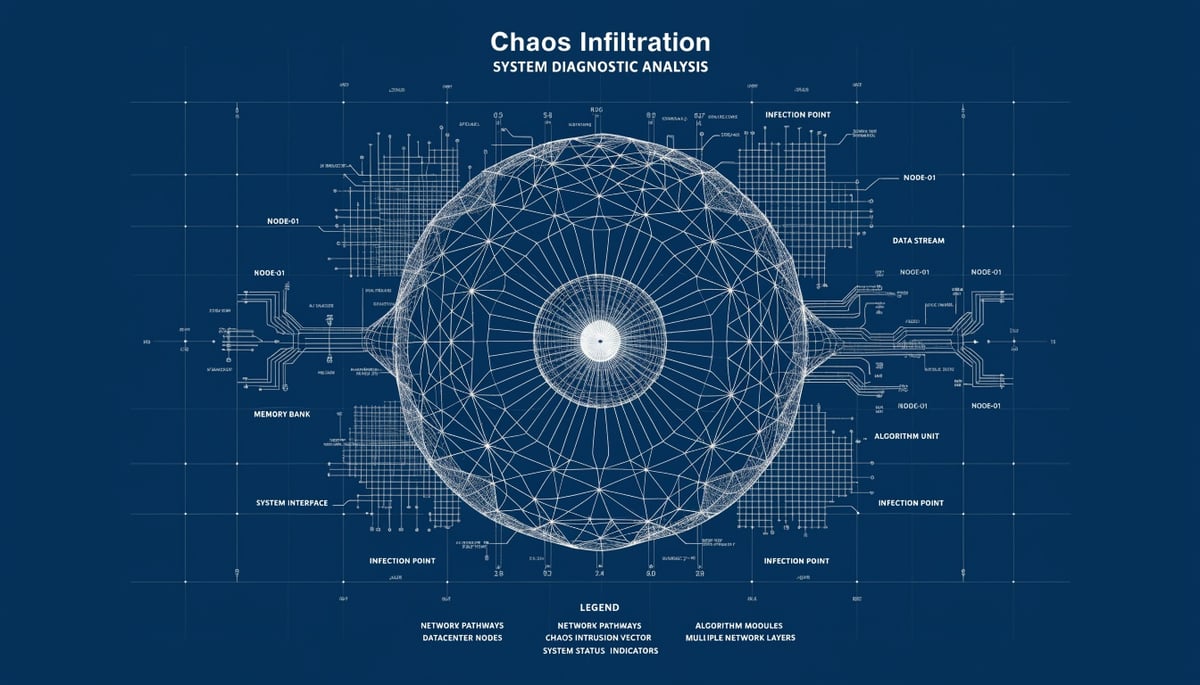
When Chaos malware infiltrates a misconfigured cloud deployment, the consequences cascade through your organization like dominoes. The malware establishes persistent backdoor access, allowing attackers to return at will - even after you think you've cleaned the infection. Your cloud infrastructure becomes a launching pad for cryptocurrency mining operations that consume computational resources you're paying for, driving up costs while degrading performance for legitimate workloads. (Source: The Hacker News)
The financial impact extends far beyond inflated cloud bills. Organizations experiencing similar cloud breaches face immediate operational disruption as security teams scramble to identify compromised systems and contain the spread. Production workloads grind to a halt during incident response, with some companies reporting complete service outages lasting 48-72 hours. The addition of SOCKS proxy capabilities means your infrastructure could be weaponized for illegal activities, potentially triggering law enforcement investigations and regulatory scrutiny.
Data exposure represents the most severe risk. Cloud deployments typically house customer databases, intellectual property, API keys, and internal communications. When attackers gain unfettered access through misconfigured services like Hadoop, they can exfiltrate this sensitive information before deploying their malware payloads. The regulatory implications are staggering - GDPR violations alone can result in fines up to 4% of annual global revenue, while HIPAA breaches trigger mandatory notifications that damage customer trust and trigger class-action lawsuits.
The scope of vulnerability is massive. Industry surveys consistently show that 65-80% of organizations have at least one misconfigured cloud service exposed to the internet. These misconfigurations aren't limited to small businesses - Fortune 500 companies regularly expose databases, storage buckets, and compute instances through simple oversights. Each exposed service represents a potential entry point for Chaos and similar malware families.
What makes this threat particularly insidious is the shift in targeting strategy. Traditional botnets focused on consumer routers and IoT devices with limited value. By pivoting to cloud infrastructure, threat actors gain access to enterprise-grade computing power, corporate data, and legitimate business credentials. The compromised systems have higher bandwidth, better uptime, and more valuable data than traditional botnet targets.
The urgency stems from three converging factors happening right now. First, cloud adoption accelerated dramatically during 2024-2025, with many organizations rushing deployments without proper security reviews. Second, the Chaos variant's new proxy capabilities indicate threat actors are actively monetizing these compromises through multiple revenue streams - not just cryptocurrency mining but also selling access to other criminal groups. Third, the connection to Silver Fox and Operation Silk Lure suggests this isn't opportunistic hacking but part of coordinated campaigns by sophisticated threat groups with specific intelligence collection objectives.
Your cloud infrastructure represents your organization's crown jewels - the systems that power revenue generation, store competitive advantages, and maintain customer trust. When misconfigured services hand attackers the keys to this kingdom, the resulting breach doesn't just disrupt operations for a few days. It fundamentally undermines your competitive position, triggers months of remediation efforts, and creates legal liabilities that persist for years through litigation and regulatory enforcement actions.
The Attack Chain: From Cloud Misconfiguration to SOCKS Proxy Backdoor
The attack begins when threat actors scan internet-facing infrastructure for exposed Hadoop deployments lacking authentication controls. These misconfigured instances represent low-hanging fruit - services accidentally exposed during cloud migrations or development environments inadvertently connected to production networks. The attackers specifically target Hadoop's REST API endpoints, which process application creation requests without proper validation when misconfigured.
Once a vulnerable deployment is identified, the initial compromise unfolds through a carefully crafted HTTP request. The attacker submits a malicious application to the Hadoop service, embedding shell commands within the application parameters. This technique exploits the service's ability to execute user-supplied code - a feature intended for distributed computing that becomes a weapon when authentication is absent.
The embedded shell commands follow a precise sequence designed to minimize detection. First, they retrieve the Chaos agent binary from attacker-controlled infrastructure at pan.tenire[.]com. The binary download occurs over standard HTTP, blending with normal cloud traffic patterns. Next, the commands modify file permissions using chmod 777, ensuring the malware can execute regardless of user context.
After execution, the Chaos variant immediately deletes itself from disk - a anti-forensic technique that complicates incident response. However, the malware has already established persistence through memory-resident processes and scheduled tasks. This new variant strips away the SSH propagation capabilities of earlier versions, replacing them with focused cloud exploitation modules.
The restructured Chaos binary introduces a SOCKS proxy feature that transforms compromised systems into traffic relays. This capability serves multiple purposes in the attack chain. Attackers route their command-and-control communications through the proxy, obscuring their true location behind layers of compromised infrastructure. The proxy also facilitates lateral movement by tunneling connections to internal resources that aren't directly accessible from the internet.
This proxy functionality represents a strategic evolution from the original Kaiji malware base. Where Kaiji focused primarily on DDoS capabilities, this Chaos variant prioritizes stealth and persistence. The SOCKS implementation allows attackers to maintain long-term access while conducting reconnaissance, data theft, or cryptocurrency mining operations without triggering network anomaly detection.
The connection to Operation Silk Lure reveals a broader campaign infrastructure. The same domain hosting Chaos payloads previously distributed ValleyRAT through phishing emails containing decoy documents. This infrastructure overlap suggests either shared resources among Chinese cybercrime groups or a single operation running multiple attack vectors simultaneously.
The removal of router exploitation code indicates deliberate targeting refinement. Rather than casting a wide net across IoT devices, this variant focuses exclusively on cloud infrastructure where the potential returns - computational resources, stored data, network access - far exceed those of consumer routers. The streamlined codebase also reduces the malware's footprint, making it harder for endpoint detection systems to identify malicious behavior.
Through this attack chain, a single misconfigured Hadoop instance becomes a beachhead for extensive network compromise. The SOCKS proxy transforms the victim's infrastructure into attack infrastructure, while cryptocurrency mining operations generate revenue using the victim's computational resources and electricity costs.
Chaos Malware Attack Chain
Detection: Spotting Silver Fox's Infrastructure and Behavioral Signals
Your security team needs to hunt for specific indicators that reveal when Silver Fox's infrastructure connects to compromised systems. The domain pan.tenire[.]com serves as a critical detection point - any connection attempts to this infrastructure should trigger immediate investigation. Monitor DNS queries and HTTP requests targeting this domain, as it represents the command-and-control channel through which attackers retrieve their malware payloads.
The SOCKS proxy functionality introduces distinctive network patterns that differentiate this variant from standard botnet traffic. Look for unusual proxy connections originating from cloud workloads that typically don't require such functionality. These connections often appear on non-standard ports outside the typical SOCKS ranges of 1080 or 9050, as attackers attempt to blend malicious traffic with legitimate cloud communications.
Focus your detection efforts on Hadoop REST API endpoints receiving application creation requests. The attack chain begins with HTTP POST requests to /ws/v1/cluster/apps/new-application endpoints containing embedded shell commands. Your web application firewalls and API gateways should flag any application submissions that include command execution patterns like wget, curl, chmod, or direct binary execution attempts.
Process execution monitoring reveals the malware's operational footprint. Watch for processes that immediately delete their parent binaries after execution - a technique the attackers use to minimize forensic artifacts. The sequence of chmod 777 followed by immediate file deletion represents a clear behavioral signature. Your endpoint detection systems should alert on any process that modifies permissions to world-writable status then removes itself from disk within seconds.
Cloud API logs expose reconnaissance and lateral movement activities. Monitor for authentication attempts from IP addresses that haven't previously accessed your cloud environment, particularly those originating from Chinese infrastructure ranges. The malware's removal of SSH propagation functions suggests attackers now rely on compromised cloud credentials for expansion, making IAM audit logs critical for detection.
Key Insight: The malware's removal of SSH propagation functions suggests attackers now rely on compromised cloud credentials for expansion, making IAM audit logs critical for detection.
Network traffic analysis should prioritize identifying proxy relay patterns. Compromised systems exhibit bidirectional traffic flows where inbound connections from external sources are immediately forwarded to other internal or external destinations. This traffic laundering behavior appears as matching byte counts between seemingly unrelated connections, with minimal processing delay between receipt and forwarding.
Memory forensics provides deeper visibility into the restructured malware's operation. The 64-bit ELF binary maintains specific function signatures despite code refactoring. Hunt for processes with network capabilities that lack corresponding service definitions or legitimate parent processes. The malware's extensive rewrite means traditional Chaos signatures won't match, but the core DDoS and mining capabilities still generate recognizable system calls.
Prioritize these detection activities based on your environment's exposure. Organizations with internet-facing Hadoop deployments should immediately audit access logs for the past 60 days. Those running containerized workloads need to examine Docker daemon logs for unexpected container spawning or privilege escalation attempts. Cloud-native environments should enable GuardDuty or equivalent services to baseline normal behavior before this variant spreads further through misconfigured infrastructure.
Immediate Hardening: Close the Doors Silver Fox Exploits
Your cloud infrastructure requires immediate hardening across three critical timeframes to prevent the Chaos variant from establishing its foothold. The malware specifically targets exposed Hadoop REST API endpoints and other misconfigured services that process unauthenticated requests - vulnerabilities that exist in thousands of cloud deployments right now.
Immediate Actions (Complete This Week)
Start by auditing every Hadoop deployment in your environment for exposed REST API endpoints. The malware exploits these services when they accept application creation requests without authentication - a default configuration in many deployments. Disable public access to all Hadoop interfaces and implement authentication requirements on any that must remain accessible.
Your cloud storage buckets need immediate attention. In AWS, review S3 bucket policies and block public access at the account level using aws s3control put-public-access-block. For Azure Storage accounts, set the minimum TLS version to 1.2 and disable anonymous blob access through the Azure portal or CLI. Google Cloud Storage buckets should have uniform bucket-level access enabled with gsutil iam ch allUsers:objectViewer gs://bucket-name removed from all production buckets.
Enable multi-factor authentication on all cloud management accounts immediately. AWS IAM users should have virtual MFA devices configured, Azure Active Directory requires conditional access policies enforcing MFA for portal access, and GCP accounts need 2-Step Verification enabled through the Google Admin console. These controls prevent attackers from pivoting through compromised credentials even if they breach perimeter defenses.
Short-Term Hardening (Complete This Month)
Deploy cloud-native logging to detect suspicious API calls that indicate reconnaissance or exploitation attempts. AWS CloudTrail should monitor all regions with event selectors capturing management and data events. Configure Azure Activity Logs to stream to a Log Analytics workspace where you can create alert rules for unauthorized resource modifications. GCP Cloud Audit Logs need to capture Admin Activity and Data Access logs for all services, particularly Compute Engine and Cloud Storage.
Network segmentation prevents the malware from spreading between cloud workloads. Create separate VPCs or VNets for production, development, and management systems. AWS Security Groups should follow least-privilege rules - explicitly define allowed traffic rather than using 0.0.0.0/0 source ranges. Azure Network Security Groups require similar restrictions, while GCP firewall rules should specify source tags and service accounts rather than broad IP ranges.
Enforce encryption for all data in transit between cloud services. AWS services should use VPC endpoints to avoid internet routing, with TLS 1.2 minimum for all API calls. Azure Private Endpoints provide similar isolation for PaaS services. GCP Private Service Connect ensures traffic between your VPC and Google services remains on Google's network.
Long-Term Resilience (Complete This Quarter)
Infrastructure-as-code transforms security from reactive patching to proactive prevention. Terraform, CloudFormation, or ARM templates should define all cloud resources with security controls baked into the definitions. Version control these templates and implement approval workflows that prevent unauthorized changes from creating the misconfigurations that Chaos exploits.
Cloud Security Posture Management tools continuously scan for the exact misconfigurations this malware targets. AWS Security Hub aggregates findings from GuardDuty and Inspector, automatically flagging exposed services and weak authentication. Azure Security Center provides similar capabilities with secure score tracking. GCP Security Command Center identifies misconfigurations across your entire Google Cloud organization, including the exposed APIs and weak IAM policies that enable initial compromise.
Incident Response: Containing and Evicting Silver Fox
When Chaos malware infiltrates your cloud environment, every minute counts. The malware's ability to execute remote commands and establish SOCKS proxy connections means attackers maintain persistent access even as you scramble to respond.
Your incident response must balance speed with forensic preservation - rushing to wipe infected systems destroys evidence needed for attribution and understanding the full scope of compromise.
Immediate Containment (First 4 Hours)
Isolate affected cloud accounts by implementing network segmentation rules that block all outbound connections except those required for forensic collection. The malware communicates with attacker infrastructure through HTTP requests and WebSocket connections - severing these channels prevents further command execution while preserving system state.
Revoke all API keys and service account credentials associated with compromised Hadoop deployments. The attackers gained initial access through unauthenticated REST API endpoints - any credentials these services used for inter-system communication are potentially compromised. Generate new credentials but don't deploy them until after eradication verification.
Block proxy connections at your cloud network perimeter by creating deny rules for traffic patterns associated with SOCKS proxy behavior. Focus on connections originating from compute instances that don't typically require proxy functionality - database servers, application backends, and internal processing nodes.
Forensic Investigation (Hours 4-24)
Document the initial entry vector by examining cloud audit logs for HTTP requests containing embedded shell commands. The malware arrives through application creation requests to Hadoop services - these requests leave distinctive patterns in access logs showing base64-encoded payloads or unusual application parameters.
Map the timeline of compromise by correlating file creation timestamps with network connection logs. The attack sequence follows a predictable pattern: HTTP request arrival, binary download from attacker infrastructure, permission modification using chmod commands, and execution followed by deletion. Each step generates log entries across different systems.
Identify the scope of lateral movement by searching for SSH authentication attempts from compromised systems. While this variant removed SSH spreading capabilities, attackers might have deployed additional tools after establishing their foothold. Check for unusual process creation events, especially those involving cryptocurrency mining or network scanning utilities.
Eradication and Recovery (Days 1-3)
Remove malware artifacts by searching for ELF binaries with permissions set to 777 - the universal read/write/execute permissions the attackers apply. The malware deletes itself after execution, but failed deployments or partial infections often leave traces in temporary directories or user home folders.
Rebuild compromised Hadoop deployments from clean images rather than attempting in-place remediation. The malware's ability to execute arbitrary shell commands means attackers could have planted additional backdoors or modified system configurations in ways that scanning tools won't detect.
Reset all credentials system-wide, not just those directly associated with compromised services. The SOCKS proxy functionality allowed attackers to route traffic through your infrastructure - any authentication that traversed these proxied connections should be considered compromised.
Key Insight: The SOCKS proxy functionality allowed attackers to route traffic through your infrastructure - any authentication that traversed these proxied connections should be considered compromised.
Validation Before Restoration
Verify eradication by monitoring for reconnection attempts to known attacker infrastructure. Deploy canary tokens in rebuilt systems - files or credentials that trigger alerts if accessed - to detect any remaining attacker presence. Run these validation checks for at least 72 hours before restoring production workloads, as attackers often wait for incident response teams to stand down before reactivating dormant implants.
Threat Intelligence Context: Silver Fox's Targeting and Attribution
Silver Fox operates as a financially motivated cybercrime group with Chinese origins, leveraging a diverse malware arsenal that extends well beyond the Chaos variant. The group's operational patterns reveal a calculated approach to target selection - they systematically scan for exposed services across cloud providers, focusing on organizations that have rushed cloud migrations without implementing proper security controls.
The presence of Chinese language characters within the malware code and reliance on China-based infrastructure points to operators comfortable working within Chinese digital ecosystems. This geographic attribution aligns with broader trends in Chinese cybercrime operations that blend commodity malware distribution with targeted campaigns against specific sectors.
Operation Silk Lure, documented by Seqrite Labs in October 2025, showcases Silver Fox's dual approach to initial access. The campaign deployed email phishing alongside infrastructure scanning, using decoy documents to deliver ValleyRAT while simultaneously probing for misconfigured cloud services. This parallel attack strategy maximizes their chances of establishing persistent access - if phishing fails, exposed cloud services provide an alternative entry point.
The group's malware ecosystem demonstrates clear evolutionary relationships. Chaos emerged as an evolution of Kaiji malware, inheriting its ability to target Docker instances while adding cross-platform capabilities for Windows and Linux environments. The latest variant strips out SSH propagation functions while adding SOCKS proxy features - a strategic pivot that suggests Silver Fox recognizes the value of compromised infrastructure for traffic laundering over simple botnet expansion.
ValleyRAT serves a complementary role in Silver Fox's toolkit, providing remote access capabilities that persist after initial compromise. While Chaos focuses on resource exploitation through cryptocurrency mining and DDoS capabilities, ValleyRAT enables interactive command execution and data theft. This combination allows operators to monetize compromised systems through multiple revenue streams simultaneously.
The financial motivation becomes clear when examining their service offerings. Beyond traditional cryptocurrency mining operations that generate passive income from compromised computational resources, the addition of SOCKS proxy functionality positions Silver Fox to compete in the proxy-as-a-service market. Criminal groups pay premium prices for clean residential and cloud proxies to mask malicious traffic - a service that commands higher margins than DDoS-for-hire operations.
AISURU's inclusion in their broader ecosystem suggests Silver Fox maintains relationships with other cybercrime operators or potentially operates multiple botnets under different brands. The parallel development of proxy features across both AISURU and Chaos indicates coordinated capability enhancement rather than coincidental evolution.
The group demonstrates operational security awareness through their infrastructure choices. The pan.tenire[.]com domain serves dual purposes - hosting malware payloads while maintaining command-and-control communications. By reusing infrastructure across campaigns, they reduce operational costs but create detection opportunities for defenders tracking their activities.
Silver Fox's targeting philosophy prioritizes volume over precision. Rather than carefully selecting high-value targets, they cast wide nets across internet-facing infrastructure, exploiting whatever misconfigurations they discover. This opportunistic approach explains why victims span multiple industries and geographies - any organization with exposed Hadoop deployments or similar misconfigurations becomes a potential target regardless of sector or size.